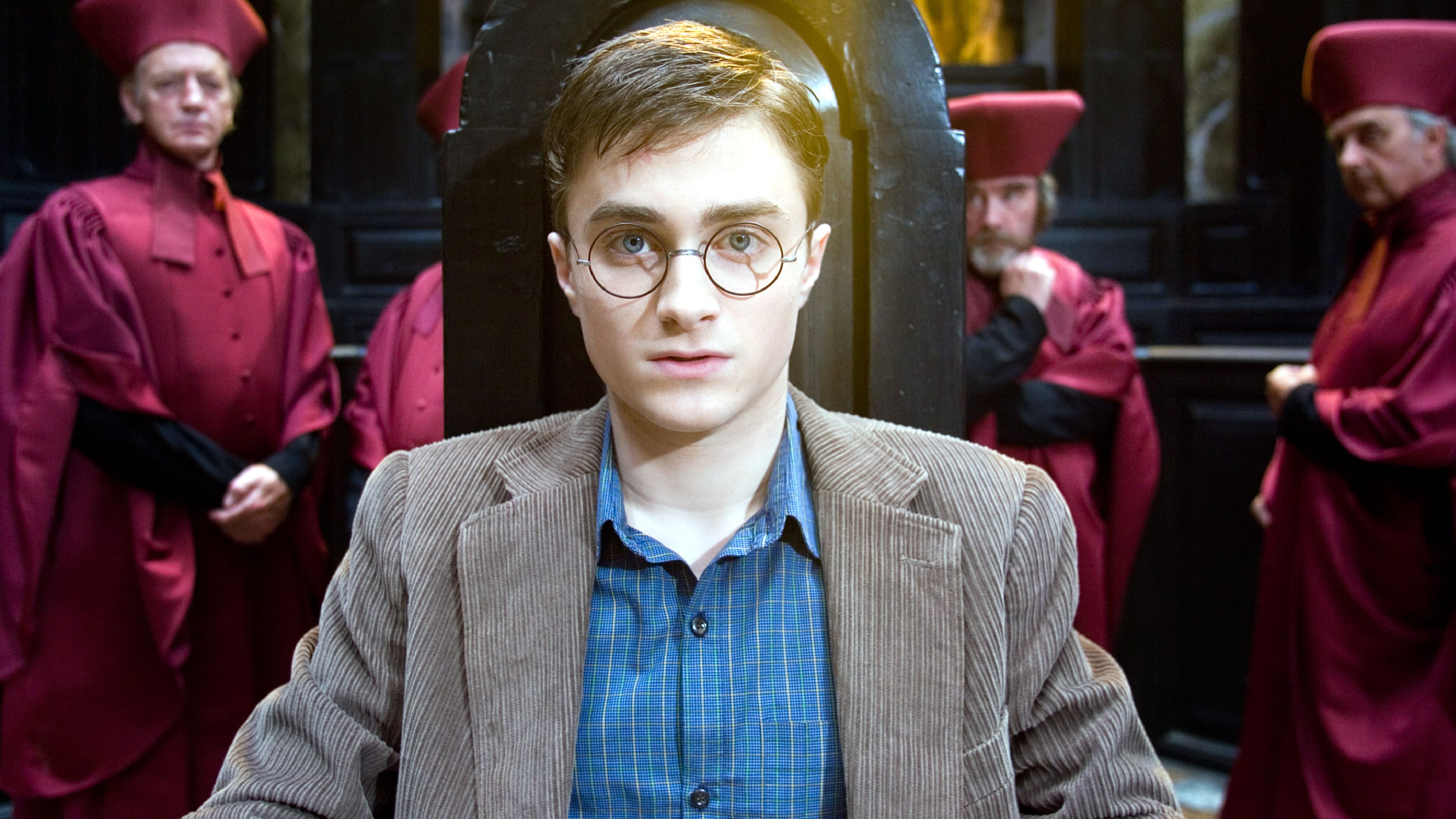
Daniel Radcliffe is best known for playing Harry Potter, but he has used the money from being the face of a franchise to pursue bold, unconventional passion projects, including theater like Merrily We Roll Along. He’s an actor who isn’t afraid to take a wild swing.
Radcliffe’s best movies show his range. He’s played everything from a superpowered, zombified corpse in Swiss Army Man to an unhinged son ironically trying to take down magicians in Now You See Me 2, and that was in the same year.
Radcliffe has also pursued fearlessly weird projects on the television side. He got to play a new role every season in the underrated comedy anthology series Miracle Workers, and Radcliffe is currently the MVP in NBC’s new comedy The Fall and Rise of Reggie Dinkins.
However, Radcliffe has also been working as a stage actor since before the Harry Potter franchise even wrapped. He controversially went fully nude for a scene in Equus on the West End as far back as 2007. This is part of an ongoing trend of casting screen actors as a draw for Broadway ticket sales.
This happened again when Radcliffe starred in the 2011 revival of How to Succeed in Business Without Really Trying. When he left, the role was taken over by Darren Criss, who was starring in Glee at the time, and later by Nick Jonas. Radcliffe clearly loves performing on stage, as he’s currently in a limited engagement of Every Brilliant Thing.
Unfortunately, Broadway is the opposite of Harry Potter when it comes to accessibility. The rise of proshots (short for “professionally shot” live musicals) like Hamilton, Broadway tickets drop from hundreds of dollars to the price of a streaming subscription, however. For the first time ever, you can see Radcliffe in Merrily We Roll Along streaming on Netflix now.
The 2023 revival of Merrily We Roll Along brought new life to Stephen Sondheim’s 1981 musical, which follows three friends across twenty years, told in reverse chronological order. The show begins with the dissolution of their friendship and works backward toward their hopeful first meeting, reframing each scene with the knowledge of what’s coming.
The central trio carries the entire show, and the production thrived because of the chemistry between Daniel Radcliffe, Hamilton and Mindhunter star Jonathan Groff, and Lindsay Mendez. Radcliffe won the Tony Award for Best Featured Actor, Groff won Best Actor, and Mendez earned a nomination for Featured Actress, reflecting how central their performances were to the revival’s success.
Despite the ambitious structure, Merrily We Roll Along has a surprisingly contained, relatable premise. It’s fundamentally about friendships that change over time, with the reverse chronology adding a compelling hook. Instead of wondering what happens next, the audience is constantly asking how things fell apart.
That emotional clarity makes it particularly well-suited for a proshot. RadicalMedia, who did the proshot of Hamilton and Come From Away, filmed Merrily We Roll Along during its limited run. The production preserves the staging, lighting, and performances exactly as they were on stage, but the camera adds a different layer. Close-ups during key emotional beats often intensify the intimacy, though occasional off-camera line readings can briefly highlight the limitations of the format.
Now that Merrily We Roll Along is streaming on Netflix, it’s an ideal example of the medium’s potential. Radcliffe’s star power, combined with Groff’s fanbase, creates a strong entry point, while the grounded story makes it accessible to viewers who might not typically seek out musicals.
Proshots have the potential to simultaneously help both movies and live theater. The conventional wisdom is if theater is too accessible, people won’t pay high prices to see it.
However, there is an example of a proshot that increased audience interested in the live show. Hamilton tickets continue to be some of the most expensive on Broadway despite the Hamilton proshot having been streaming on Disney+ for years.
Proshots take advantage of a very expensive art form that is already in progress and brings a new stream of revenue to the movie theaters. It’s a win-win, in that making theater more accessible might actually make it more popular.
Richard Linklater has long been fascinated by the passage of time, most explicitly in Boyhood and, with looser intentionality, the Before trilogy. Boyhood famously filmed from 2002 to 2014, capturing childhood and adolescence organically without makeup tricks, CGI, or recasting.
Now Linklater is attempting something even more ambitious: a full film adaptation of Merrily We Roll Along that will shoot intermittently over the next two decades. That emphasis on nostalgia and the erosion of youthful ideals of Merrily We Roll Along fits neatly with Linklater’s sensibilities.
Dazed and Confused similarly lingered on a formative moment before lives diverged, while Merrily deconstructs a friendship by working backwards to its hopeful beginnings. There’s no reason to expect a modern update, so the project will likely lean into lush period design from the 1970s, 1960s, and 1950s.
Like the stage musical, the movie will trace a friendship backward through time, but Linklater’s method adds another layer, letting the actors actually age into earlier versions of themselves. The movie is set to star Ben Platt, Paul Mescal, and Beanie Feldstein. The casting is intriguing for different reasons.
Platt is a Broadway powerhouse, even if the film version of Dear Evan Hansen was not beloved like the stage musical. Mescal, who will take on the central role portrayed by Groff in the proshot, isn’t known for singing but brings undeniable charisma and emotional grounding.
Feldstein, meanwhile, had a rocky Broadway experience when she led Funny Girl before the role ultimately passed to Lea Michele after mixed reviews. If Linklater records vocals separately rather than live on set, it could allow the actors to focus on one strength at a time, a benefit that film has over theater.
It’s an interesting cinematic experiment, but Linklater is just starting the 20-year process now, and he’s already in his mid-60s. When the movie comes out in the late 40s, it will be fascinating to compare it to the Daniel Radcliffe-led proshot of Merrily We Roll Along.
Discover the latest news and filmography for Daniel Radcliffe, known for Harry Potter and The Woman in Black.