Fantasy has always been a perfect avenue for imagination. Whether it's an alternate twist on our real world or a realm defined by magic and heroic quests, nothing is impossible.
Thanks to that immersive draw, the genre also remains a lucrative one on the big screen and the small. Fantasy television, in particular, is currently enjoying a resurgence — but it's always been a gold mine rife with impeccably satisfying tales.
In a world where witches, vampires, and daemons secretly live among humans, Diana Bishop (Teresa Palmer) is a tenured professor at Oxford University and a witch who pursues science and history instead of spells. When her repressed magic subconsciously summons a long-lost manuscript from Oxford's Bodleian Library, Diana finds herself caught in the crosshairs of deadly opportunists who covet the ancient document. Further complications arise when neither Diana nor Matthew Clairmont (Matthew Goode), a millennia-old vampire, can deny the bond growing between them.
Bad Wolf and Sky Studios adapt historian-turned-fiction author Deborah Harkness' All Souls trilogy (now an ongoing quintet) with aplomb. A Discovery of Witches strikes every escapist note with pitch-perfect poise, and it's often more mature than it gets credit for. Harkness applies a biological lens to her supernatural worldbuilding, and her scholarly heroine evolves from rejecting her potential to commanding her power. Add on magnificent historical costumes, hand-constructed sets, and a forbidden romance (complete with Matthew's ravenous gazing), and we have a romantasy winner.
Ned (Lee Pace) has a unique talent beyond his superb baking skills: he can resurrect dead creatures with a single touch. Ned only uses his ability to assist local detective Emerson Cod's (Chi McBride) investigations, but he can't help but apply them to Chuck (Anna Friel), his murdered childhood sweetheart. The only problem? Ned's gift comes at a price. Any subsequent skin-to-skin contact returns the revived corpses to their deceased states. As Ned and Chuck tentatively navigate a romance without physical touch, Chuck also adjusts to her second chance at life.
For two seasons, Pushing Daisies explores relationships outside of society's conventional norms and ponders the fragility of life with gentle melancholy. The fact that its musings take the form of a whimsical, sentimental rom-com featuring episodic sleuthing, acrobatic banter, and vividly stylized production design that's apropos for a Bryan Fuller show is icing on the proverbial cake. The ABC series' storybook sweetness is as rich and memorable as the first bite of that legendary homemade pie your grandma made from memory and secret ingredients.
Before Disney's seminal 1991 musical, CBS transferred the 18th-century French fairy tale into modern-day New York City. Criminals violently abduct and assault District Attorney Catherine Chandler (Linda Hamilton) after they mistake her for another woman. Vincent (Ron Perlman), a tender-hearted man whose countenance and build resemble a two-legged lion, rescues her from the brink of death and nurtures her back to health. Even though the two occupy incompatible worlds, their star-crossed yearning becomes irresistible.
Beauty and the Beast showrunner Ron Koslow nestles a time-honored romantic dynamic inside a procedural template. He retains the original novel's crystal-clear metaphors about looking beyond superficial assumptions, although to Catherine's credit, she needs little convincing. Her poetically soulful leading man mentors an underground community of outcasts who live in the shadows to both survive and subvert human bigotry. Season 3 takes a steep downturn, but the first two seasons are swoonworthy to a fault; Vincent and Catherine's self-sacrificial compassion and mutual empathy secure their soulmate status to the point they develop a psychic connection.
The Lord of the Rings: The Rings of Power could've easily been a hollow attempt to mine nostalgia for one of filmmaking's singular achievements. With the blessing of J. R. R. Tolkien's estate and showrunners J. D. Payne and Patrick McKay's palpable reverence for the material, The Rings of Power's greatest heights rival Peter Jackson's The Lord of the Rings movies. Lore diversions aside, Payne and McKay fundamentally understand Tolkien's message about human failings and bittersweet hope, and they strive to do justice to his 89-year legacy.
Like their character-driven story choices, the duo wields Prime Video's enormous budget with exacting intention. Cinematic visuals and exquisitely detailed costumes furnish Middle-earth with the immersive, ethereal ambience it deserves. A tapestry of remarkable actors erases any lingering doubts, whether it's the ferocious rage of Morfydd Clark's Galadriel, Charles Edwards' effortless gravitas as the tormented Celebrimbor, or Charlie Vickers' slithery, malicious Sauron. Every indication points toward The Rings of Power refining its minor imperfections and flourishing into a modern masterpiece.
The scores below reveal your true character. Your highest number is your match. Even a tie tells a story — the Fellowship was never made of simple people.
You carry something heavy — and you carry it alone, even when you don't have to. You were not born for greatness, and that is precisely why greatness chose you. Your courage is not the roaring, sword-swinging kind; it is quiet, stubborn, and terrifying in its refusal to quit. The Ring weighs on you more than anyone can see, and still you walk toward the fire. That is not weakness. That is the rarest kind of strength there is.
You are, without question, the best of them. Not the most powerful, not the most celebrated — but the most essential. Your loyalty is not a trait; it is a force of nature. You would carry the person you love up the slopes of Mount Doom if it came to that, and we both know you'd do it without being asked. The world needs more people like you, and the world is lucky it has even one.
You were born to lead, and you have spent years running from it. The crown is yours by right, but you know better than anyone that right means nothing without the will and the worthiness to back it up. You are tempered by loss, shaped by long roads, and defined by a code of honour you hold to even when no one is watching. When you finally step forward, the world shifts. Because it was always waiting for you.
You have seen more than you let on, and you say less than you know — which is exactly as it should be. You are a catalyst: you do not fight the battles yourself, you ignite the people who can. Your wisdom comes not from books but from an age of watching what happens when it is ignored. You arrive precisely when you mean to, and your presence alone changes what is possible. A wizard is never late.
Graceful, perceptive, and almost preternaturally calm under pressure — you see things others miss and act before others react. You do not need to make a scene to be remarkable; your presence speaks for itself. You are loyal to those you choose to stand beside, and that choice is not made lightly. You have lived long enough to know that the most beautiful things in this world are also the most fragile, and that is why you fight to protect them.
You are loud, proud, and absolutely formidable — and beneath all of that is one of the most fiercely loyal hearts in Middle-earth. You don't do anything by half measures. Your friendships are forged like iron, your grudges run as deep as mines, and your courage in battle is the kind that makes legends. You came into this fellowship suspicious of everyone and ended it willing to die for an elf. That is not a small thing. That is everything.
You think in centuries and act in absolutes. Order, dominion, control — not because you are cruel by nature, but because you have decided that the world left to itself always falls apart, and you are the only one with the vision and the will to hold it together. You were not always this. Something was lost, or taken, or betrayed, and the version of you that stands now is the answer to that wound. The tragedy is that you're not entirely wrong — just entirely too far gone to course-correct.
You are a study in contradiction — pitiable and dangerous, cunning and broken, capable of both cruelty and something that once resembled love. You are defined by loss: of innocence, of self, of the one thing that gave your existence meaning. Two voices war inside you constantly, and the tragedy is that the better one sometimes wins, just not often enough, and never at the right moment. You are a warning, yes — but also a mirror. We are all a little Gollum, given the right ring and enough time.
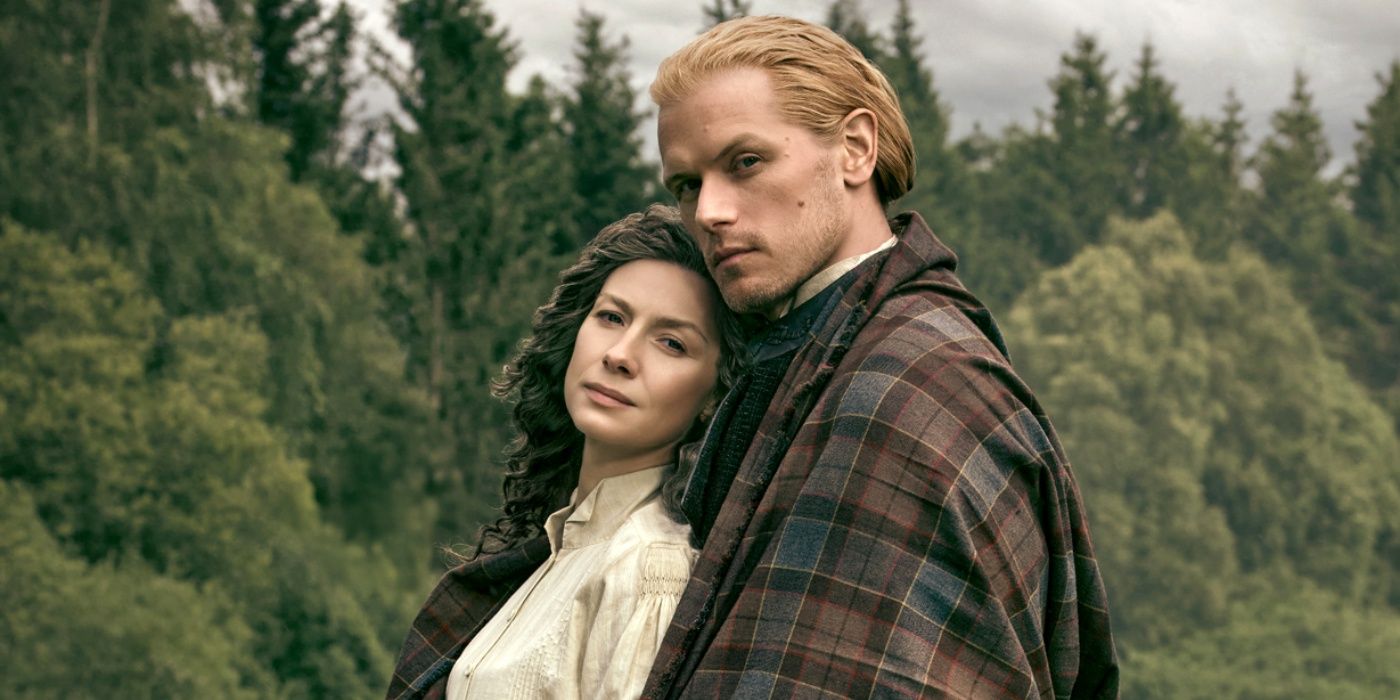
After 12 years and eight captivating seasons, the curtain has closed on the television version of author Diana Gabaldon's time-traveling World War II nurse Claire Fraser (Caitríona Balfe) and her 18th-century Scottish husband, Jamie Fraser (Sam Heughan). Saying goodbye is bittersweet whether audiences watched from Outlander's auspicious beginning or dived in because of the saga's perpetual fanfare. And from their prickly first meeting to their closing breaths as they lay upon that stone, Claire and Jamie persisted as they always have: two survivors brought together by fate who defy history's every attempt to separate them.
Despite being surrounded by rampant violence and misery, the Frasers' cosmic connection elevates Outlander into its own brand of comfort show. Starz's sheer production value, paired with the early seasons' assured vision as a romance for the ages, seduces those already inclined to enjoy the show's prestige soap opera style. Meanwhile, Outlander's period drama, grit, and political intrigue win over more dubious viewers. A love story first, foremost, and always, Season 8's satisfying ending means fans can rewatch again and again with contentment.
Adolescent Wirt (Elijah Wood) and his precocious younger brother Greg (Collin Dean) wander through the Unknown, an off-kilter world filled with warm-toned woodland foliage, eccentric inhabitants, and magic both splendor and sinister. Unsure how or why they arrived, they're searching for the path home. Beatrice the talking bluebird (Melanie Lynskey) and the enigmatic Woodsman (Christopher Lloyd) take pity on the brothers by helping them evade the Beast (Samuel Ramey), a demonic entity that feeds upon despair.
A mythic feeling permeates Patrick McHale's Emmy-winning miniseries. Over the Garden Wall layers New England iconography, absurdist satire, mythological references, and contemporary jokes over its cozy coming-of-age adventure-meets-macabre eldritch horror environment. The character designs and autumnal color schemes simultaneously evoke older Saturday morning cartoons and the illustrative fine art bound inside elaborate fairy tale collections. Nothing less than a tonal, atmospheric, and narrative masterclass, there's still no genuine equivalent to Over the Garden Wall when it comes to modern classics, animated or otherwise.
Based on one of the most acclaimed manga phenomenons to date, this vehemently faithful adaptation of Hiromu Arakawa's Fullmetal Alchemist is a towering feat on its own merit. In Amestris, alchemy has been integrated into daily life for the citizens capable of channeling the method's potent effects. Brothers and state-sanctioned alchemists Edward (Romi Park) and Alphonse Elric (Rie Kugimiya) seek out the fabled philosopher's stone, hoping to reunite Alphonse's soul with his human body. The siblings must also survive their country's dangerous trappings and an array of deadly enemies.
Arakawa models her steampunk-adjacent universe after Europe's Industrial Revolution, from the mechanical industries to the sociopolitical hierarchy. Yet neither the Fullmetal Alchemist manga nor Fullmetal Alchemist: Brotherhood would soar as high if they didn't root themselves in the heroes, antiheroes, and villains' complex psychological range. Arakawa deftly and scathingly weighs the disastrous consequences of arrogance or desperation, a tyrannical militarized government, genocide, and revenge vendettas against guilt, atonement, and the clarity provided by communal love. Warmth and idiosyncratic comedy offset Brotherhood's devastating weight; together, they guarantee a hall-of-fame fantasy anime.
A sublime plot twist is literally just the beginning for The Good Place. Fearless and self-effacing, Michael Schur's sitcom always lives up to its premise's parameters, no matter how many times Michael (Ted Danson), the demon architect with a heart of gold, resets his hellish experiment for his four human test subjects. Schur's razor-sharp wit and consistent empathy turn philosophical theories into ethical dilemmas anyone can digest, as well as essential debates for every person's growth.
Ultimately, The Good Place is about choosing compassion and personal accountability precisely because meaningful, lasting improvement requires us to embrace uncertainty and routine failure. Pushing against the systemic cruelties designed to deplete our spirits isn't enough if we don't contribute resistance through painstaking, individual hard work. The answer is obvious, not glamorous. Yet the life-affirming sincerity with which The Good Place handles flawed people floundering their way toward existential crisis and self-actualization elevates the series into cathartic resonance.
Kim Shin (Gong Yoo), a military warrior from Korea's Goryeo Dynasty, returns home after winning another battle in his king's name, only for his ruler to slaughter his entire household. Before his spirit can reach the afterlife, God sentences Kim to immortality as punishment for his violence. Only his prophesied bride can end his eternal existence. Now a dokkaebi (goblin), Kim spends the next nine centuries in self-reflection, providing for humans, grieving their deaths, and longing for his own. Finally, the Goblin's Bride arrives in the form of Ji Eun-tak (Kim Go-eun), a modern-day student whose survival defies death's laws. And with her effusive influence brightening his life, for the first time in 900 years, Shin wants to live.
A record-breaking cultural sensation hailing from writer Kim Eun-sook (Netflix's The Glory), Guardian: The Lonely and Great God might as well be considered a minor miracle. The entire behind-the-camera team employs the defining K-Drama tropes with enough technical efficiency that viewers are bound to feel spoiled by the engrossing grandeur. Sure, Guardian is melodramatic to the core, but that's crucial to the K-Drama appeal. The committed performers pour everything into selling the gut-wrenching twists, the bittersweet dual romances, and the kooky odd-couple friendships. Weeping is a small price to pay for an experience this intimate and visceral.
Welcome to Piltover, where technological progress, magic, political tension, and familial strife intertwine. This luxurious utopia belongs solely to the aristocratic elite. Their entitled comfort and unchecked experiments occur at the expense of their undercity's well-being; relentless oppression, socioeconomic inequality, and opportunistic criminals have all but ruined Zaun. When Zaun's burgeoning uprising gains strength, Vi (Hailee Steinfeld) and Jinx (Ella Purnell), two orphaned sisters separated by tragedy, stand on opposing sides.
Few predicted a revelatory artistic landmark would emerge from a League of Legends prequel series. Arcane stands as a one-in-a-million triumph on almost every level. French studio Fortiche's transcendent animation is painterly and textured, flowing with musicality and jaw-dropping experimentation. It's an efficient storytelling machine, as propulsive or meditative as the character-first pathos requires. Crushing abandonment, resentment, ambition, a warped sense of justice, and lost innocence drive said ensemble's choices, backed by a monumental voice cast well-equipped for tragedy. The sisters fight to draw blood, and Arcane does the same.