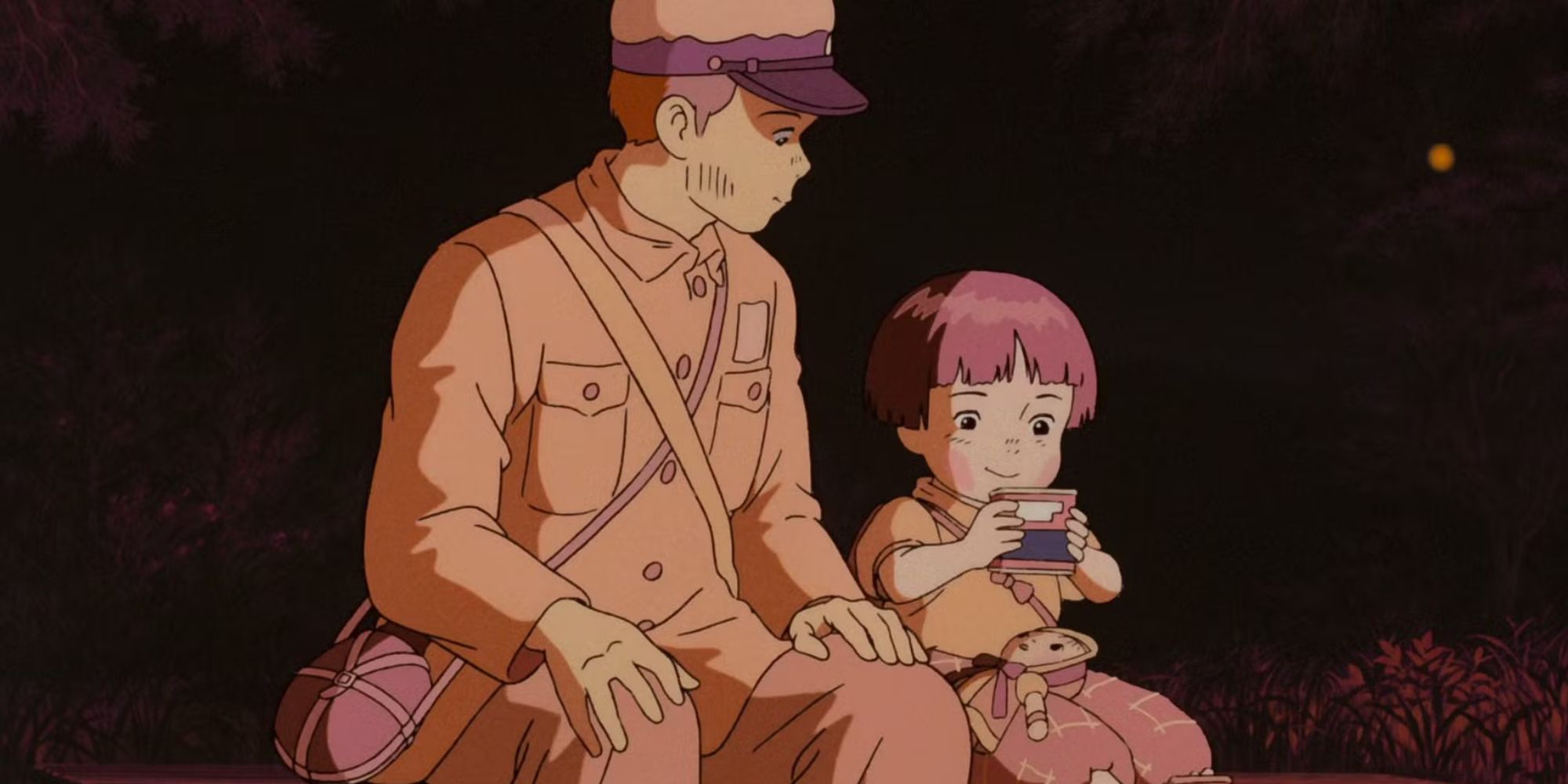
For decades, Grave of the Fireflies has been regarded as one of the most devastating animated films ever created. Directed by Isao Takahata and released in 1988, the wartime tragedy follows two siblings struggling to survive in Japan during the final months of World War II. Its heartbreaking story has left generations of viewers emotionally shaken.
Now, nearly four decades after its theatrical debut, a remarkable discovery has given fans a new perspective on the acclaimed film, per NHK. An original version of Grave of the Fireflies, long believed to be lost forever, has been found in Tokyo. Even more surprising, the newly uncovered footage reveals a version of the movie that may be even more haunting than the one audiences know today.
The discovery came after rights holders confirmed in 2025 that an original print of Grave of the Fireflies had been preserved in a Tokyo warehouse. For years, many believed this early version had been discarded after the film's completion. Detailed production records were scarce, making its survival especially unexpected.
What makes the find significant is that it preserves the movie before certain scenes received their final coloring. According to reports, several moments in the original release existed in a much rougher state, relying heavily on line work rather than the fully painted imagery seen in later versions.
The recovered print contains three unfinished-looking sequences totaling approximately 74 seconds. Instead of complete color animation, these moments feature black and reddish sketch-like lines. While brief, the scenes offer a rare glimpse into the creative decisions made during Grave of the Fireflies' original production process.
The darker appearance of these scenes isn't simply a technical curiosity. The minimalist presentation dramatically changes the emotional tone. Without rich colors to soften the imagery, viewers are left to focus on the raw expressions, movements, and suffering portrayed on screen.
Among the rediscovered moments is a sequence showing Seita being beaten after attempting to steal vegetables so he and Setsuko can eat. Another depicts him preparing a fire to cremate his younger sister's body. These are already some of Grave of the Fireflies' most heartbreaking events, and the stripped-down visuals make them feel even harsher.
Rather than appearing unfinished in a negative sense, the scenes create an almost documentary-like atmosphere. The rough lines emphasize desperation and tragedy in a way that polished animation sometimes cannot. The result is a viewing experience that feels more intimate and emotionally direct than the final theatrical cut of Grave of the Fireflies.
The discovery has also sparked renewed discussion about Takahata's artistic evolution. Experts have noted similarities between the newly found footage and techniques the director would embrace years later. In particular, the emphasis on visible sketch lines recalls elements of The Tale of the Princess Kaguya, Takahata's final feature film.
Professor Seiji Kanoh of Tokyo Zokei University suggested that the uncolored imagery demonstrates how powerful incomplete-looking visuals can be when used intentionally. In The Tale of the Princess Kaguya, Takahata frequently allowed rough brushstrokes and empty space to remain visible, creating an emotional effect unlike traditional animation.
Isao Takahata's uncompromising realism and stylistic boldness that elevate his films, making him the greatest director the studio has seen.
Although the company controlling the film's rights currently has no plans to publicly release the rediscovered version, its existence offers a fascinating window into one of animation's greatest achievements. More importantly, it reveals that some of Takahata's most celebrated artistic ideas may have been taking shape decades earlier than fans realized.
The discovery does not change the legacy of Grave of the Fireflies, but it deepens it. Already considered one of Studio Ghibli's most emotionally devastating works, the film now carries an additional layer of historical significance. For longtime fans, the existence of this darker, rougher version serves as a reminder that even masterpieces can still hold secrets waiting to be uncovered.