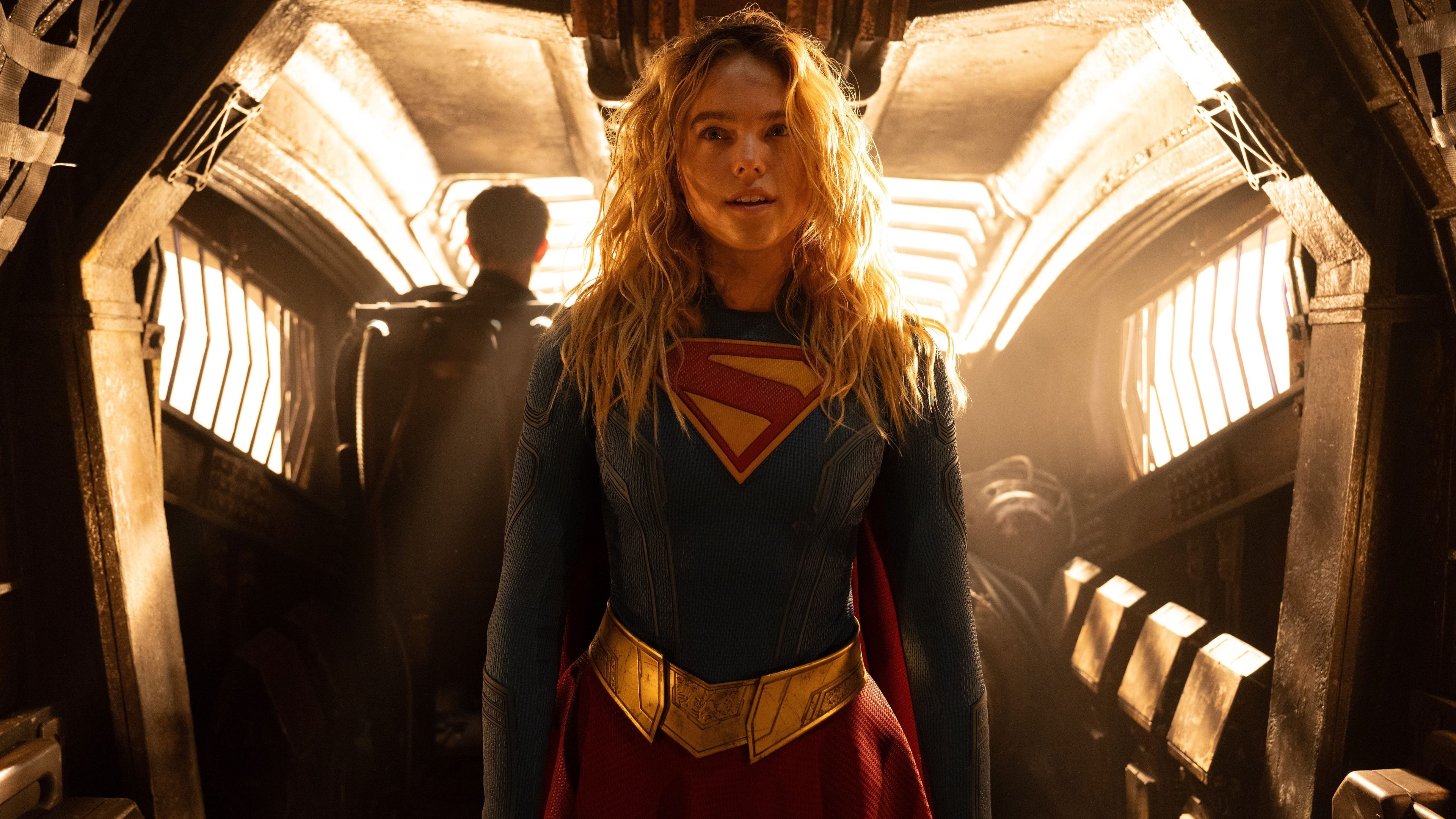
The DC Universe has a huge box office disappointment on its hands, as Supergirl's opening weekend bombed, with it coming in under projections. The second entry in the rebooted universe that James Gunn and Peter Safran started for DC Studios only mustered a $38 million opening weekend domestically. The worldwide launch for the supposed summer tentpole is a mere $68 million.
Both figures are well below what DC and Warner Bros. had hoped for and what industry projections indicated. Heading into its June 26 opening weekend, Supergirl was projected to earn between $47 million and $50 million domestically. Its global opening was targeting a figure around $80 million to $90 million. Instead, the superhero movie came well shy of hitting the low end of its already lower projections.
Following Superman's massive $220 million global debut last year ($125 million of which came domestically), it was always expected that Supergirl would open below. Making this much less was not anticipated, though. Supergirl's hefty $170 million budget makes it very difficult for the movie to become a box office success by the end of its run, given this opening; if it manages Superman's legs (2.8x), it will finish below $200 million worldwide.
DC has already commented on Supergirl's opening weekend box office, with Safran saying that the movie "didn’t meet our box office expectations" before expressing that they "remain confident" in the "broader, long-term strategy." So what went wrong here? There are several reasons that collectively contributed to Supergirl's unfortunate performance.
A key factor in Supergirl's underwhelming opening is the actual release date DC and WB landed on. A prime summer release sounds good on paper and is par for the course for a lot of superhero movies. However, the June 26 launch meant sandwiching Supergirl between two of the year's biggest movies for families and kids: Toy Story 5 and Minions & Monsters.
While Supergirl's story is a bit more mature, the franchise certainly would like to have younger audiences experience Milly Alcock's Kara Zor-El's journey. That is more difficult to do when most are concentrated on seeing Toy Story 5 for the first time or again. And with Minions & Monsters coming out shortly, this weekend may have been a chance for families who already saw Pixar's sequel to take a break from the theater before checking out Illumination's new film.
Supergirl could have fared better earlier in the summer or even with a spring release where competition was less stiff. Toy Story 5's $70 million is the biggest second weekend for a 2026 movie, and would be considered the 8th biggest opening of the year. Remove that from the equation, and Supergirl surely could have done better.
Another potential explanation for Supergirl's box office is DC pinning the movie on a character who would not be considered one of the comics' A-list heroes. Supergirl is a well-known character, having appeared in three films (counting Alcock's Superman cameo) and several shows (including The CW's 6-season series focused on her).
However, Supergirl is not Superman, Batman, or Wonder Woman, nor is she on the level of perennial Justice League members Green Lantern, Aquaman, and The Flash. It always made sense for the DCU to launch with a movie for the Man of Steel, but even after including his cousin for a scene, the Girl of Steel is not a character general audiences know as well.
Even if we parallel this to the Marvel Cinematic Universe, Supergirl is not as big of a comic book character as Hulk, who Marvel Studios used as the star of its second movie. That's not to say a Supergirl solo film would never work, but she probably would've benefited from audiences spending more time with her ahead of time.
One of the most clear reasons behind Supergirl's poor box office is its quality. For all the attention that its financial performance will receive, there is little reason to think that the movie wouldn't have done better if it was just better.
Supergirl's Rotten Tomatoes score sits at 56% with critics, with the audience score currently at a mixed 76%. Just about everyone has high praise for Alcock's performance, as she establishes herself as a great Supergirl live-action actress. But the movie has been critiqued for its story, a poor villain, its needle drops, and more.
Molly Freeman's Supergirl review for ScreenRant noted that this is "a fine, even good, superhero movie," but noted that the film "muddied" by not properly understanding and fleshing out Kara. Her arc is underdeveloped, and the result is, for some, unearned. It's no coincidence that Supergirl debuted well below tracking estimates once the mixed reviews started to surface.
The DCU is not without blame for Supergirl's performance, either. Gunn and Safran kicked off their ambitious plans with a bang last year, and Superman's performance brought a belief that audiences were ready to accept an entire new universe. However, the truth is that it was completely unproven whether viewers were ready to follow the franchise anywhere or were just excited to have a good, hopeful Superman solo movie again.
Supergirl came less than a year later and even included David Corenswet's Superman for a few scenes to include the franchise's poster boy. But the movie's box office shows that audiences are not already at a place where they will watch every DCU movie or show immediately, needing to know how the universe expands and what it's setting up for the future.
This connects back to our second point. DC should have anchored the early films in this universe to its Justice League members to fully get audiences onboard before getting to a Supergirl feature with Lobo as its major DC supporting character. Clearly, the marketing campaign couldn't convince everyone to check it out no matter what.
It's also worth noting that Supergirl's performance isn't a total anomaly. Gone are the days of the 2010s, when superhero movies were the pinnacle of pop culture and Hollywood. They can still be massively big and incredibly successful (see Deadpool & Wolverine in 2024), but these films are no longer considered guarantees to draw in audiences.
Audiences have evolved and tastes have changed. Video game movies, original horror films, and other genres have risen in popularity as superhero movies' box office declines. For every win comic book movies have had with Spider-Man: No Way Home, Guardians of the Galaxy Vol. 3, Deadpool & Wolverine, and Superman, there are flops like Morbius, The Marvels, and The Flash.
Even when these movies don't completely bomb, Hollywood has still yet to adjust to the new status quo. The Fantastic Four: First Steps and Thunderbolts* made substantially less than the average MCU movie did during the 2010s. Betting $170 million on Supergirl is another example of studios operating like we're still in the peak of the superhero movie boom.
Arguably the most surprising piece of data we can use to explain Supergirl's opening weekend is the fact that the female-led superhero movie did not draw in more women. The audience for comic book movies traditionally skews male, but those led by a female typically attract more women viewers looking to enjoy a blockbuster with a more relatable lead hero.
However, only 41% of Supergirl's audience was female during its opening weekend (via The Wrap). That is the second-lowest draw for a female-led superhero movie in the last decade, with The Marvels' 35% the lowest. Other notable performances include Black Widow at 42% (BoxOfficePro), Birds of Prey at 46% (Variety), and Madame Web at 47% (BoxOfficePro).
Captain Marvel has Marvel's high at 52.3% (BoxOfficePro), while Wonder Woman 1984 was 50% female, and Wonder Woman had a record 53% (Deadline). The failure of Supergirl to get the attention of a key target audience is a huge reason for this $38 million debut. It couldn't break into the general consciousness and become the type of must-see female-led superhero movie that historically performs the best.