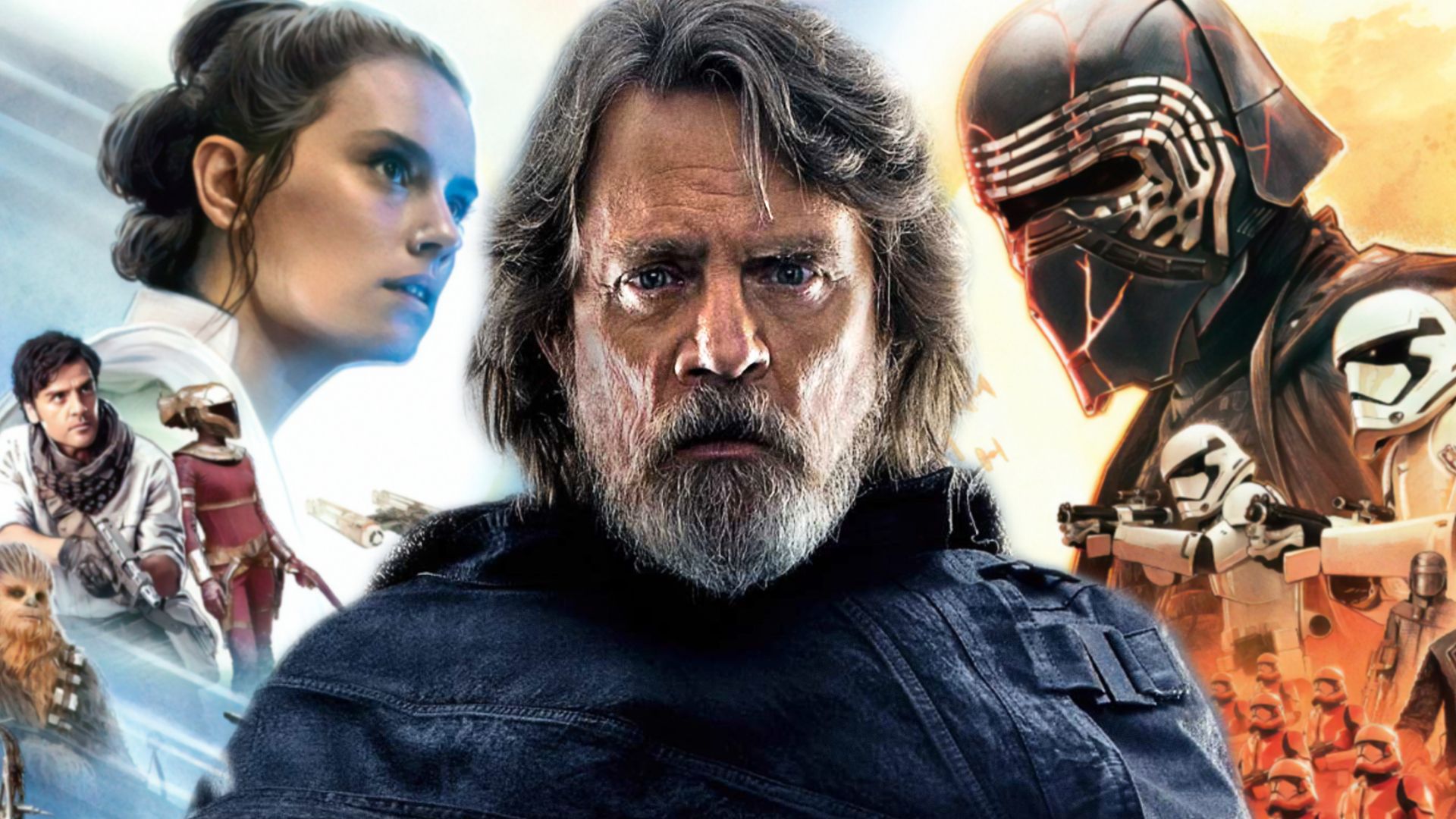
The most popular Star Wars: The Rise of Skywalker fan theory was the perfect way to fix many of the sequel trilogy's biggest flaws. The announcement of a new cinematic Star Wars era ignited unprecedented excitement, fueled by decades of built-up expectations. The birth of a prosperous New Republic and the rise of a powerful New Jedi Order led by a wise Luke Skywalker promised a bright, and most importantly different, future for old and new heroes. Trailers teased exciting mysteries, such as the enigmatic origin of the Force-sensitive scavenger Rey and the dark secrets behind the sinister Supreme Leader Snoke.
Unfortunately, instead of a smooth continuation, the Star Wars sequel trilogy devolved into a deeply divisive experience marred by conflicting creative directions. The central flaw lay in a total lack of a unified narrative plan, which led each entry to rewrite the previous installments' setups. This creative tug-of-war resulted in logical inconsistencies that became impossible to ignore, including Emperor Palpatine's poorly explained return and Finn's weak character arc. Even worse, the decision to reset the status quo back to a derivative "Rebels vs Empire" dynamic nullified the original heroes' victories, a problem embodied by a cynical Luke Skywalker.
After Star Wars: The Force Awakens and Star Wars: The Last Jedi, there were several major problems that Star Wars: The Rise of Skywalker wouldn't be able to fix completely to satisfy all audiences. However, ending the sequel trilogy on a high note was still possible, and a single change could have redeemed the controversial third installment, if only a fan theory had been accurate.
Prior to the release of The Rise of Skywalker, the fiercest speculation surrounded its title. The most popular fan theory suggested that the word "Skywalker" would become the replacement title for the Jedi. This idea offered a correction to the Jedi Order, which had spent centuries alienating its practitioners through an emotionally detached doctrine. The Star Wars prequels demonstrated how the Jedi's antiquated rules caused their own destruction, most notably when the High Council ripped a young Anakin Skywalker away from his mother and later forced him to keep his relationship with Padmé Amidala a secret, leaving him vulnerable to Palpatine’s manipulation.
The transformation of the Skywalker surname into a title finds a precedent in expanded Star Wars literature, specifically in Timothy Zahn's canonical novel Thrawn: Alliances. In it, the Chiss Ascendancy possesses its own Force-sensitive individuals, almost exclusively young girls, who use their precognitive abilities to guide starships through the hazards of the Unknown Regions. The Chiss term for these Force-guided navigators translates directly as "Sky-walkers," which is a surprisingly literal description of their job. Instead of a singular scavenger awkwardly adopting an extinct bloodline on Tatooine, the finale could have shown the dawn of a new spiritual movement.
Rey's Sith name just became confirmed by the latest Star Wars comic and Rey's own dark Force vision.
The name Skywalker belonging to anyone who chooses to walk the path of the light would have validated Luke Skywalker's realization that the time had come for the Jedi to end. Luke's desire to end the Jedi didn't necessarily mean that heroes should throw away their lightsabers or disconnect from the Force entirely, but instead that the galaxy desperately needed to move past a toxic binary that forced individuals to choose between arrogant monks and murderous Sith lords. A Skywalker movement would have permanently dismantled the elitist hierarchy of the old temple system to democratize the Force and allow future warriors to live fully-rounded lives.
The Rise of Skywalker's conclusion to Star Wars' sequel trilogy is a safe finale that doesn't dare to deliver a dramatic resolution to any of the established storylines. Even though The Last Jedi explicitly challenged the idea that heroic destiny is tied to royal bloodlines, the final entry reversed course to reveal Rey as Emperor Palpatine's granddaughter. This sudden pivot essentially reduced a multi-generational galactic conflict into a family dispute between the Palpatines and the Skywalkers, which left the broader universe feeling remarkably small and completely disconnected from the epic scale of the original trilogy.
The execution of The Rise of Skywalker's "Skywalker" name payoff isn't any better. Rey reveals she has taken up Luke's surname to an anonymous civilian on Tatooine at the last minute. What should have been a monumental declaration of rebirth is ultimately an awkward piece of exposition. And sadly, Rey's The Rise of Skywalker resolution has had almost zero impact on the franchise to this day, with Daisy Ridley's Jedi warrior still absent from all Star Wars media.
The Rise of Skywalker's ending is especially frustrating when contrasted with the numerous superior alternatives that could have given Star Wars' sequel trilogy a lasting legacy. Episode IX could have concluded with Rey proudly retaining her status as a "nobody" to illustrate how a person's value is defined by their choices rather than an inherited family coat of arms. A tragic or deeply unconventional ending, like Ben Solo surviving to work toward the redemption of his family name, would have provided a far more satisfying ending and a more appropriate payoff to the movie's title.
The concept of "Skywalker" evolving into a spiritual movement would also have paid off The Last Jedi's forgotten tease. The Last Jedi deliberately lingered on a young Canto Bright child casually pulling a broom into his hand with the Force before gazing up at the starlight with hopeful eyes, which signaled the Force's awakening across the galaxy. The Rise of Skywalker could have linked Rey’s journey to this new generation of Force-sensitive outcasts. Instead of treating the Force like an inheritance, The Rise of Skywalker could have validated that lonely boy’s hope by transforming Luke's legacy into a banner for every nameless child waiting to rise against oppression.
The Last Jedi had already advanced this theme by emphasizing that Rey’s parents had no ties to any established character. Luke Skywalker’s own critical assessment of his predecessors highlighted how the old order's hubris and secrecy allowed Darth Sidious to rise to power under their noses. Yet, the revolutionary energy hinted at by the broom boy was replaced by a rigid return to the old status quo, where the Force apparently only matters if a character belongs to one of two legendary families. Approaching anything similar to the themes of the popular Skywalker name fan theory now would be extremely difficult.
How would you have liked Star Wars: The Rise of Skywalker to end?
Star Wars: The Rise of Skywalker concludes the Skywalker saga with Rey, Finn, and Poe Dameron leading the Resistance against the First Order. As the final battle unfolds, they draw upon the wisdom and strength of previous generations to confront their adversaries. Released in 2019, the film concludes the sequel trilogy.