August is a freelance film writer. She studied journalism and cinema at American University. She is a member of the journalism honor society, Kappa Tau Alpha. August has written for various networks and publications, including PBS, Gargoyle Magazine, TheThings, and Identity Theory Magazine. Before returning to entertainment writing, August worked in the Automotive section of U.S. News & World Report. In her free time, August enjoys watching movies in theaters, watching movies at home, listening to podcasts about movies, reading books about movies, watching video essays on movies, talking about movies, thinking about movies, and doing crosswords.
Toy Story currently spans six films and 31 years (including the Lightyear spinoff), amassing $16 billion in total revenue (via Axios). The films have a fervent, multi-generational fanbase, including older parents who watched the original films with their tots, nostalgic '90s kids who now have families of their own, and current youngsters experiencing the modern franchise installments.
The Toy Story movies have not only maintained but accelerated in popularity over the past three decades. The latest installment, Toy Story 5, had the highest-grossing opening in franchise history this month, making $159.6 million in three days. This record is followed by Toy Story 4, and then Toy Story 3. Part of the franchise's success is thanks to its simple, brilliant premise: What do toys do when their owners aren’t looking?
In Toy Story, toys are secretly sentient but freeze anytime a person approaches to maintain their ruse. This made generations of kids sneak up on their own toys, eager to catch a moment of motion, proof of life. However, keen adult viewers quickly identified an inconsistency in Toy Story's freeze logic. This glaring plot hole has been plaguing audiences since the 1990s, but Toy Story 5 just provided an answer.
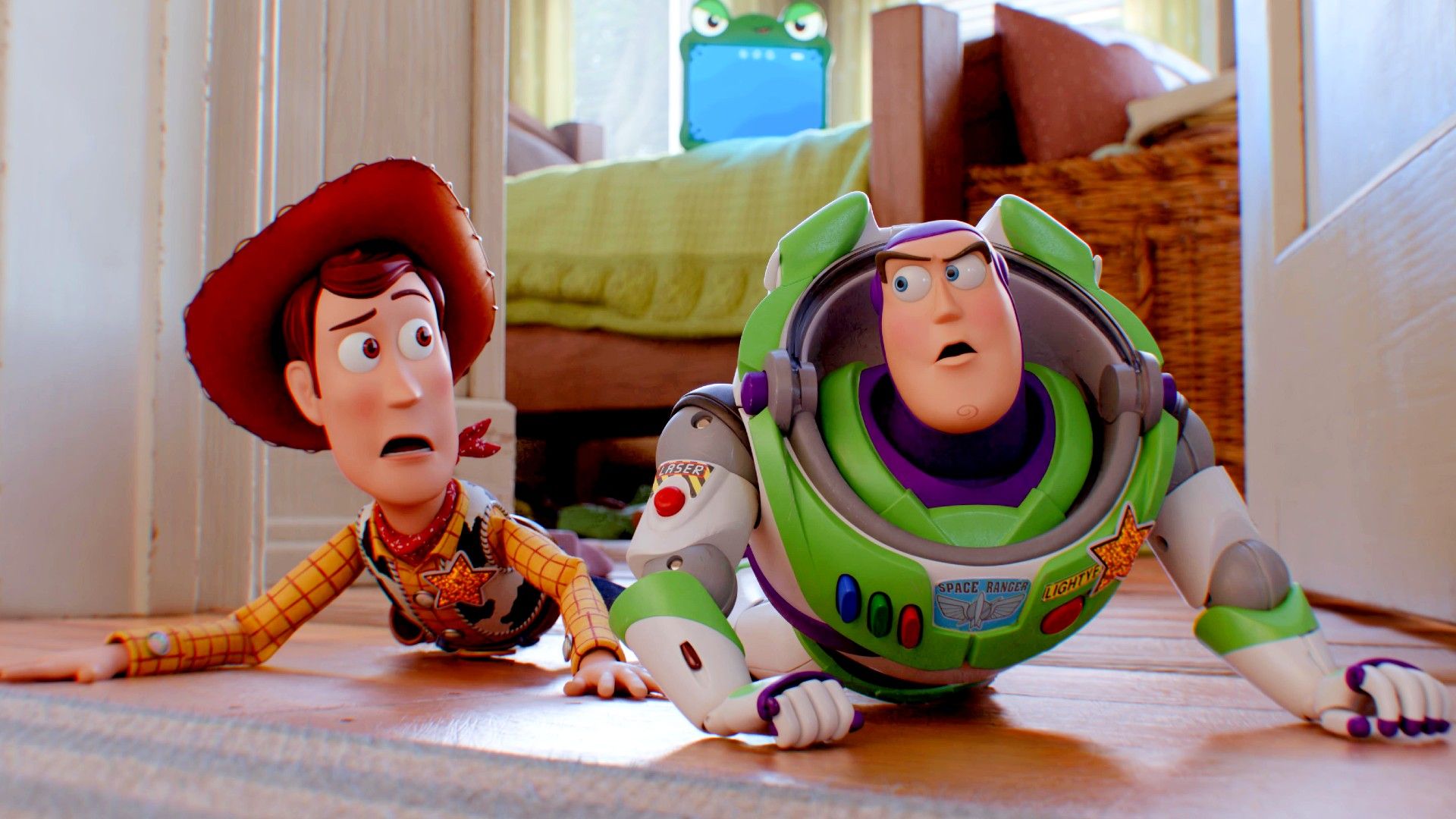
The 1995 Toy Story includes a glaring plot hole concerning Buzz Lightyear (Tim Allen) and the film’s freeze-logic—also known as “Andy’s coming.”
In the first Toy Story, the toys freeze when their owner, Andy, or any person enters the room. This is an acknowledgment that they are toys and should, therefore, not be seen moving. However, the Buzz Lightyear action figure still freezes when a kid enters the room. Eagle-eyed fans were quick to call out this logical inconsistency. Why would Buzz freeze if he did not know he was a toy?
After three decades with no explanation, Toy Story 5 has finally addressed this apparent narrative error. The 2026 animated feature opens on a large batch of new Buzz Lightyear action figures stranded on an island after their cargo container washed ashore. The factory-programmed toys embark on a grand journey back to Star Command—unaware that they are not real space agents—and end up at a shipping yard. When the Lightyears hear a shipyard worker approaching, they all suddenly freeze and collapse.
Once the worker leaves and the dolls regain movement, one of the Lightyears asks what has been plaguing Toy Story fans for decades—"Why did we freeze?" None of the Lightyears seem to have an explanation, and one simply replies, "Fascinating."
Though not a direct answer, the scene suggests that toys have an intrinsic instinct to freeze in front of humans. Whether they are aware of their toy-hood or not, every play figure is programmed with the toy-mode survival instinct. Toy Story 5's humorous cold open finally puts the decades-old plot hole to rest.
During a 2020 interview with the Huffington Post, Pixar's chief creative officer explained the decision to keep this plot hole in the final cut of the 1995 film. “We went through a lot of discussion on ‘Toy Story,’ the first one, about like, ‘If Buzz doesn’t know he’s a toy, why does he go rigid when a kid walks in the room?’ We had a lot of explanations and talk about that, too. And in the end, nobody cared,” Pete Docter said, which goes to show that detail was deemed too inconsequel to warrant an onscreen explanation.
While adult viewers are quick to call out this inconsistency, young viewers understand that reality is relative when toys are involved. Toy Story is ultimately about play and imagination, a space in which logic goes out the door. Had Buzz moved in front of humans in the first film, it would have derailed the movie's beloved plot and made a five-to-six film franchise less possible.
Toy Story 5 addresses the Buzz inconsistency less out of a need to fill in a plot hole and more as a wink to long-term fans. Pixar stuffs each Toy Story film with these kinds of Easter eggs and references.
Toy Story 5 follows Buzz, Woody, Jessie, and the rest of the gang as they confront a new challenge to playtime posed by advanced technology.