Warning! This post contains SPOILERS for Toy Story 5When Toy Story 5 was first announced, many fans wondered whether the franchise really needed another sequel (myself included). After all, Toy Story 3 provided a truly perfect conclusion that could have ended the franchise right then and there. Toy Story 4 was a decent epilogue, particularly for Tom Hanks' Woody, who found renewed purpose and goals as a toy. However, I'm happy to report that Toy Story 5 more than earns the right to exist, featuring some solid themes that have arguably been in the background of the franchise for the last three decades.
All in all, it's pretty remarkable how Toy Story 5's main conflict meshes with themes Pixar has explored since the very beginning of the franchise. Featuring a story where Bonnie's toys are naturally concerned when their child receives a brand-new tablet, the plot is incredibly relevant considering the rapid rise of new technologies (and children's use of them) even in the last decade alone.
Looking back on the previous Toy Story films, it can be argued that the themes and message behind Toy Story 5 aren't coming out of nowhere. Some decent groundwork was laid, with Toy Story 5 now bringing the concept of toys vs tech to the forefront, though thankfully in a way that's far more nuanced than what I was initially expecting.
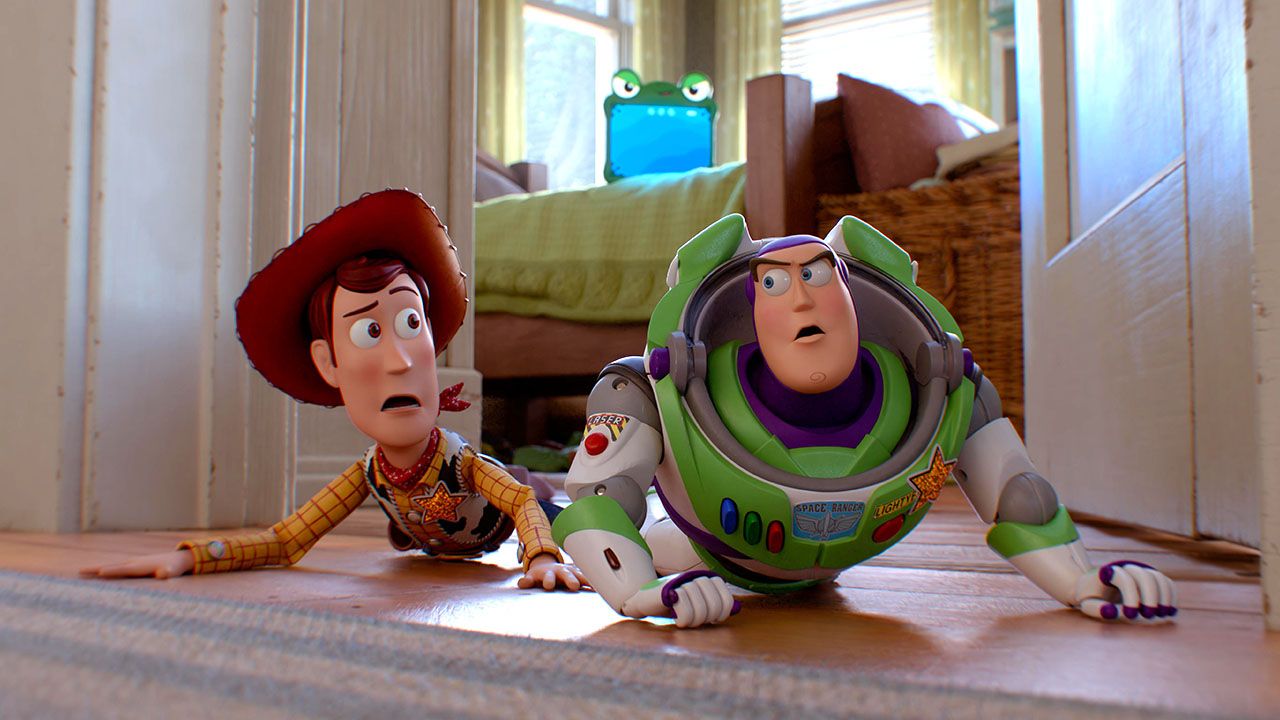
Even in 1995's original Toy Story movie, change and new technology played a surprisingly important role. The arrival of Buzz Lightyear in Andy's room absolutely represented the future, and a major status quo shift for Woody, who'd been Andy's favorite toy. Compared to Woody's pullstring and voice box, Buzz's lights, sounds, electronics, lasers, and pop-out wings absolutely captured Andy's attention (especially at the beginning). Woody feared becoming obsolete in the face of Buzz's newness and being more technologically flashy. Even Pizza Planet technically represented another means of capturing kids' attentions, featuring all kinds of arcade games and claw machines.
Although the question whether innovation changes how children play was asked in the first movie, it very much continued with Toy Story 2 and its opening with a Buzz Lightyear video game played by Rex in Andy's room. Likewise, it's also confirmed that Woody and his fellow Woody's Round-Up toys were largely forgotten with the dawn of the space race and subsequent rise of space-themed toys (like Buzz). However, while new technology and the idea of change have always been present in Pixar's world, Toy Story 5 is where the conflict between toys and tech really begins.
While previous movies featured and hinted at technology's growing role in childhood as a real-life parallel, it only makes sense that a Toy Story movie would eventually embrace the issue head-on, especially in the modern era. The rise of tablets, smartphones, streaming, apps, and all kinds of digital distractions vying for a child's attention has become extreme (not to mention their parents). While imaginative play with toys hasn't disappeared, it's obvious that the "competition" has become much fiercer compared to 1995.
This is why Toy Story 5 is so timely with such a solid message behind it. As Bonnie's attention is drawn further and further into her brand-new tablet (Greta Lee's Lilypad), we see the drawbacks of screen overuse and how digital interaction will never be a full substitute for real-life, face-to-face encounters. Likewise, one of the best critiques made by the movie is when Joan Cusack's Jessie claims tech devices can influence children to grow up far too quickly (a tragic example being when 8-year-old Bonnie is bullied by other kids online for "still" having toys).
That said, I was relieved to see that by Toy Story 5's ending, the full argument from Pixar is far more nuanced than some blanket statement declaring that all tech is bad for kids and that they should never look at a screen again.
Ultimately, Toy Story 5 does a great job reflecting this major shift and rise of technology through several of its new tech-device characters. Rather than relying solely on toys, we also see kid-focused devices like Smarty Pants, Atlas, Snappy, and Lilypad, who all want what's best for their children just as much as the toys do, something Jessie gradually discovers as the movie goes on. By rallying toys and tech together, Jessie and her friends help Bonnie make a genuine friend with Blaze by the movie's end, resulting in an incredibly satisfying conclusion overall.
At the end of the day, Pixar doesn't treat the evolution of technology and its growing place in children's lives as inherently evil.
By all accounts, it would've been easy to simply frame tech as the villain and get kids back to playing only with toys. However, the message is far from being so black and white. After all, the technology at our disposal isn't going anywhere, nor should it. Likewise, the new Toy Story movie is well aware that the problem isn't tech itself. It is when technology and the entertainment of devices and screens completely dominate a child's time and attention, leaving no room for actual play, imagination, and real-life connection.
Of course, devices can educate, entertain, and help bring people together, but room needs to be made for time in the real world, too, away from a screen. They can work in tandem, and a better balance is what's required. That's exactly what's being argued in Toy Story 5, resulting in a solid message that finally brings some longstanding ideas to the forefront of the franchise for the first time.
From Buzz Lightyear representing a cutting-edge toy in 1995, to video games, and the overall concept of embracing change as time goes on, Pixar has essentially been tracking how childhood has been evolving over the last 31 years. Toy Story 5 simply puts a direct spotlight on the conversation, delivering some of the franchise's most relevant themes and messages we can all benefit from (children and parents alike).
Toy Story 5 is now playing in theaters from Disney and Pixar.