
Warning! This review contains some spoilers for the original show and, thus, Netflix's The Last Airbender season 2.
Netflix's Avatar: The Last Airbender season 2 doesn't transcend the original show and never will, but it remains well-made, mostly well-acted, and infectiously enjoyable. To start with, I want to address those watching Netflix's The Last Airbender to see everything different from the original show and decide whether these changes are good or bad. Personally, I don't want to review something by judging it for what it isn't. In getting bogged down in changes from the original show, which will always be one of my favorites of all time, I risk doing so.
Therefore, the only changes from the original Nickelodeon animation that I will reference in this review are the ones that help, hinder, or impact the story at hand: Netflix's live-action adaptation of Avatar: The Last Airbender. With that out of the way, Netflix's Avatar: The Last Airbender picks up after a time-jump, with Aang, Katara, and Sokka still fighting off the Fire Nation in search of an Earthbending teacher for the Avatar. Therefore, as was the case with season 1 of Netflix's show, season 2 adapts most of the second season of the animated original.
The trailers for Netflix's Avatar: The Last Airbender proved as much, and indicated that the show would be very similar to what came in the first season. After watching all seven episodes, I can confirm that this is pretty much the case. There are changes to the original show primarily concerning its timeline, but it has a lot of fidelity, too. Combining this with excellent production design, a cast that ranges from just okay to great, and the right spirit, Avatar: The Last Airbender on Netflix still works, despite an annoying studio mandate that causes some problems.
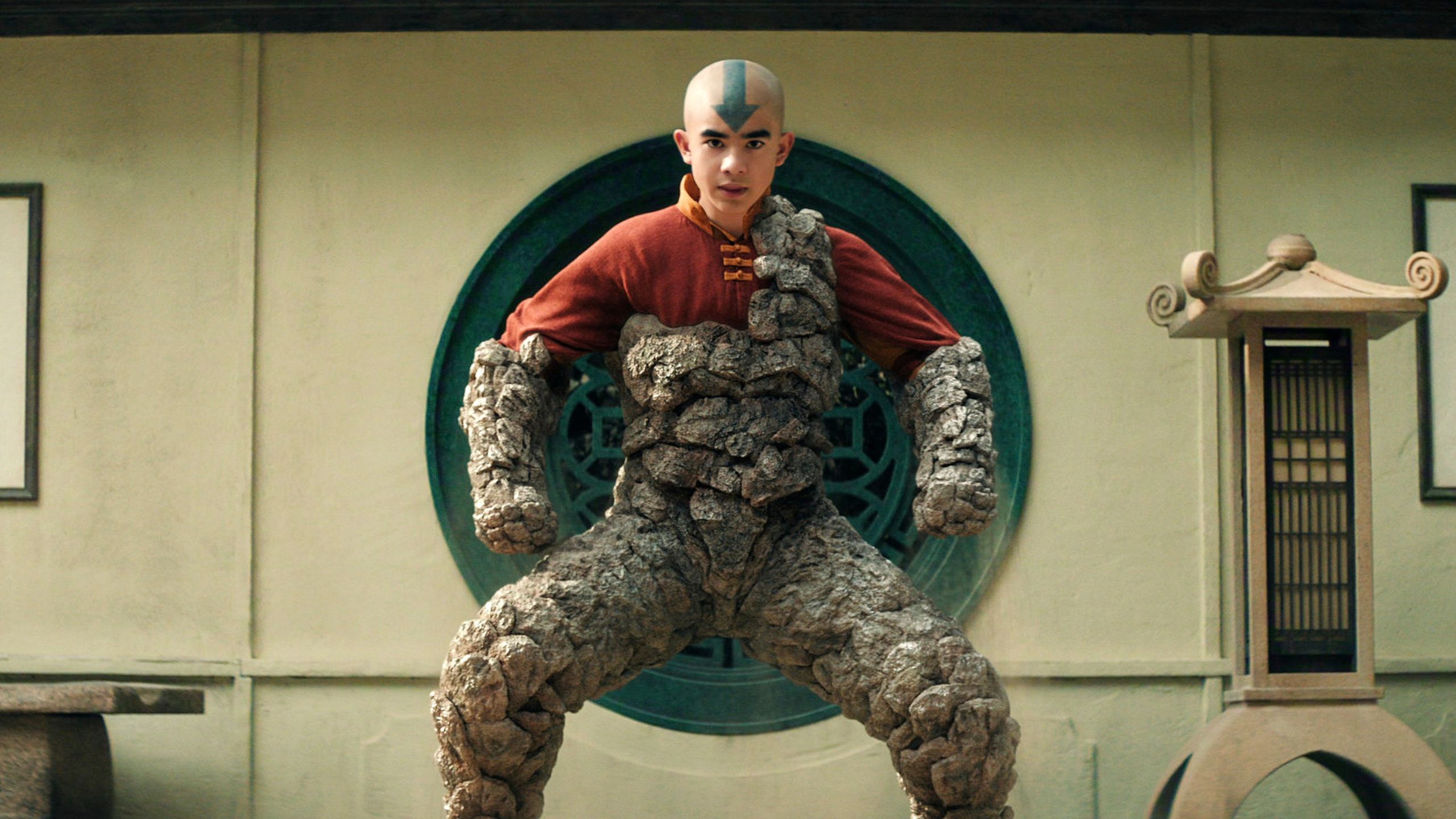
What is, undoubtedly, the best quality of Netflix's adaptation of Avatar: The Last Airbender is its production quality. Never once does this show, in both season 1 and now into season 2, feel like a phoned-in attempt at cashing in on nostalgia. Every costume, location, set, fight scene, and big moment is crafted with meticulous detail, allowing the show to feel beyond epic in scope. The child-friendly nature of the original show meant this was not always the case, but Netflix's adaptation constantly reminds us that the budget of a streaming giant is firmly on-screen.
Also, as a massive fan of the original show, I loved how accurate a lot of this production design was. Every location either looks identical or holds notable Easter eggs to those of the original show, as do the costumes of each character. Changes might be made to the story and timeline of the original story, but no one can say that The Last Airbender's creators at Netflix did not try their hardest to bring the look of the animated show to life.
The same can be said in the action sequences. The way bending is brought to life is, for the most part, extremely exciting. Some of the moves include noticeable green-screen or CGI effects that somewhat break the immersion, but that was always going to be expected with a show that is adapting one as creative as the original was. The only outright bad production moments in these scenes are when The Last Airbender's characters, be it Aang or Zuko, are rendered in full CGI, which simply looks too fake to suspend disbelief.
Beyond that, though, each action sequence works. The bending moves are beautifully performed and choreographed with a lot of fidelity to the OG show, and with the speed and fluidity that was sorely lacking in M. Night Shyamalan's The Last Airbender adaptation from 2010. To put it bluntly, Netflix clearly went to a lot of effort to make Avatar: The Last Airbender look, sound, and feel huge. In all areas, minus a few CGI hiccups, the streaming service succeeded.
On the whole, the best term to use for Avatar: The Last Airbender season 2's cast is "as you were." There weren't many improvements here, nor were there any downgrades or slip-ups regarding character depiction. My issues from season 1 remain, as do my personal standouts, meaning season 2 won't exactly change anyone's mind on how Netflix's cast adapts the original Last Airbender's iconic characters.
I maintain my criticism from season 1 that it is the writing of Katara that hinders Kiawentiio's performance, not the other way around. When given the fire and emotion Katara has throughout the original, Kiawentiio does very well, but overall, Netflix's adaptation just doesn't give her a whole lot of that, making her performance feel very one-note throughout.
In a sense, Gordon Cormier's performance as the titular character is the same. Although I feel the spirit of Aang in Cormier's performance more than I do with Kiawentiio and Katara, Cormier's acting in the critical "Angry Aang" moments that happen in Avatar: The Last Airbender season 2 can feel underbaked. Cormier can't quite find the right balance between fury, sadness, joy, and whimsy that encompasses Aang in The Last Airbender season 2, despite doing an otherwise solid job.
Neither Cormier nor Kiawentiio is outright bad here by any stretch, but they were underserved by Netflix’s scripts. Had more time been dedicated to fleshing out their characters' more emotional, fiery moments sprinkled throughout season 2, and more time to prepare to act those moments, this could have been different. I will say, though, that Cormier and Kiawentiio have great chemistry when on-screen together, which definitely helps the more mature relationship aspects of the show.
Concerning positive standouts, it is no surprise that Dallas Liu and Paul Sun-Hyung Lee remain the two strongest pillars of The Last Airbender's cast. Again, this reinforces my point that it is Netflix's scripts that hinder Aang and Katara; Zuko and Iroh are the best-written characters in the original show, and a vast majority of the material they are given in Netflix's The Last Airbender season 2 is the same. Nonetheless, Liu and Lee perform it with ease, embodying the inner conflicts both characters individually have and how that informs their relationship.
Lee's performance may mean that Iroh loses a bit of his whimsy from the original show, but he is that good in the emotional, hard-hitting moments that it does not matter. The same can be said for Liu, who expertly portrays the war inside of Zuko. It helps that Liu is also the best performer of the bending choreography of the main cast, making just about everything Zuko does in Netflix's Avatar: The Last Airbender season 2 almost perfect.
Elizabeth Yu also deserves a shoutout here as Azula. After receiving a slew of horrible online hatred after season 1, Yu better depicts more of what audiences expect from Azula. She is great as a foil to just about every character as a lone wildcard seeking power in the world. Thalia Tran (Mai), Momona Tamada (Ty Lee), and Daniel Dae Kim (Ozai) are also good alongside her, despite not getting as much to do as their animated counterparts or season 1 roles gave them.
Where new characters are concerned, the only standout here is Miyako as Toph. Toph is a fan-favorite of the original show for her brash demeanor, strong bending, unwavering loyalty, and beneath-the-surface insecurities. In this sense, Toph, like Zuko, is the most difficult character to get right. Miyako, though, nails it immediately. More than any other character, Toph feels like she was lifted from the animation and placed in live-action, thanks primarily to Miyako. In light of the risks of adapting such a fan-favorite, Miyako rises to the rock-solid challenge and smashes past it, likely making even The Boulder proud.
Tied to my criticisms of Katara and Aang's character arcs is my frustration at Netflix's episode mandate for Avatar: The Last Airbender season 2. The creators of the show recently revealed that they wrote eight episodes, as season 1 had, but Netflix forced them to cut one in favor of tightening the focus on key themes for the season. In a cruel stroke of irony, this decision had an adverse effect, with Netflix's change resulting in some of Avatar: The Last Airbender season 2's core themes feeling entirely rushed through.
Avatar: The Last Airbender Season 2 Episode
Episode 4: "The Water Falls, the Stones Emerge"
Episode 6: "The Parable of the Two Dragons"
For instance, some of the biggest arcs that all tie together and require a big focus are Aang's hesitance to use the Avatar State, Appa going missing, Jet's redemption arc, and Long Feng's villainy. I stated earlier that I wouldn't judge Netflix's show for what it didn't have in comparison to the original, and I will continue to do so. Still, Netflix's The Last Airbender includes about 50% of each of these arcs, meaning each one feels shortchanged.
If arcs from the original show are going to be introduced in the adaptation, they need to be set up and concluded in a way that feels satisfying or includes new elements for a new medium and audience, as many in Netflix's show already do. Otherwise, it is better not to include them at all. Better yet, Netflix should not have condensed what was originally planned as an eight-episode story into seven. With the extra 60+ minutes, each of these arcs could have been deepened, further explored, and, as a result, felt much more satisfying in their conclusions.
Again, I am not willing to judge Netflix's Avatar: The Last Airbender season 2 on how it compares to the original show, as it doesn't need to be it. What matters to me is whether the former captures the spirit of the latter and whether any changes made in the live-action version are made with the narrative, characters, and themes in mind. For the most part, I can say that Netflix's Avatar: The Last Airbender season 2 does exactly that; only the aforementioned aspects of the original show in the prior section of this review suffered.
Everything else felt either faithfully adapted as part of this new story or changed, altered, and referenced in a unique way. How the original episode, "The Tales of Ba Sing Se," for instance, was embedded into the wider show felt so well done here, especially throwaway stories like Toph's insecurities and Sokka's attempts at poetry. What were small, side stories with no real narrative impact in the original became genuinely compelling developments in Netflix's version, and that proves the live-action doesn't need to be a one-for-one of the original.
The same can be said for other changes. Be it Wan Shi Tong's library, Yue's impact on Sokka, Katara's earlier transition into the Painted Lady, the subsequent spiritual connection that brings to Zuko as the Blue Spirit, that persona's ties to Zuko's mother, or Azula's relationship with her, most of the changes made to Netflix's Avatar: The Last Airbender season 2 feel like they were made with a genuinely good reason as to why.
For that reason, season 2 of Netflix's Avatar: The Last Airbender still worked for me. It is infectiously enjoyable thanks to all of the great aspects it has, and, despite a few missteps here and there, some big and some small, it is doing something that a lot of adaptations of iconic, beloved stories struggle to do: standing on its own two feet as a story worth telling in a new medium, not floundering as a shameless cash grab.
All episodes of Avatar: The Last Airbender season 2 are now streaming on Netflix.


