The coming-of-age romantic dramedy is a genre that every generation rediscovers. There’s a certain ageless nostalgia for those formative years of young love (and heartbreak) that makes it a perfect style for any director rooted in specific eras, lending the entire thing an added layer of specific romanticism amid the larger nostalgia.
The latest example of that approach is Girls Like Girls, the feature-length directorial debut from Hayley Kiyoko. An actress and musician whose bittersweet love ballad of the same name has inspired a song, a music video, and a novel, Kiyoko is bringing it into a much bigger space with a feature film, even as the story remains deeply grounded despite that scope.
Girls Like Girls is a familiar plot, which is part of the point. It's a grounded love story that isn't afraid to make characters messy or deal with trickier subjects, largely executing a painfully realistic story with a good sense of craft. While some elements feel underbaked or seem one-note, the central focus and performances by Myra Molloy and Maya Da Costa give Girls Like Girls an effective emotional core.
Hayley Kiyoko's “Girls Like Girls” was originally a part of This Is Paradise. The music video for the song went viral on platforms like Tumblr, with the novel and film of the same name serving as an expansion of the original plot. Colby (played by Maya de Costa in her very impressive feature-length debut) is new to town during a summer in the mid-2000s.
Forced to move in with her estranged father after the death of her mother, Colby is straightforward but vulnerable in the realistic way that represents the surprising depth afforded to Colby as she wrestles with guilt and grief and teenage hormones. It all bleeds into a take on the classic summer archetype that confronts personal identity without being defined by it.
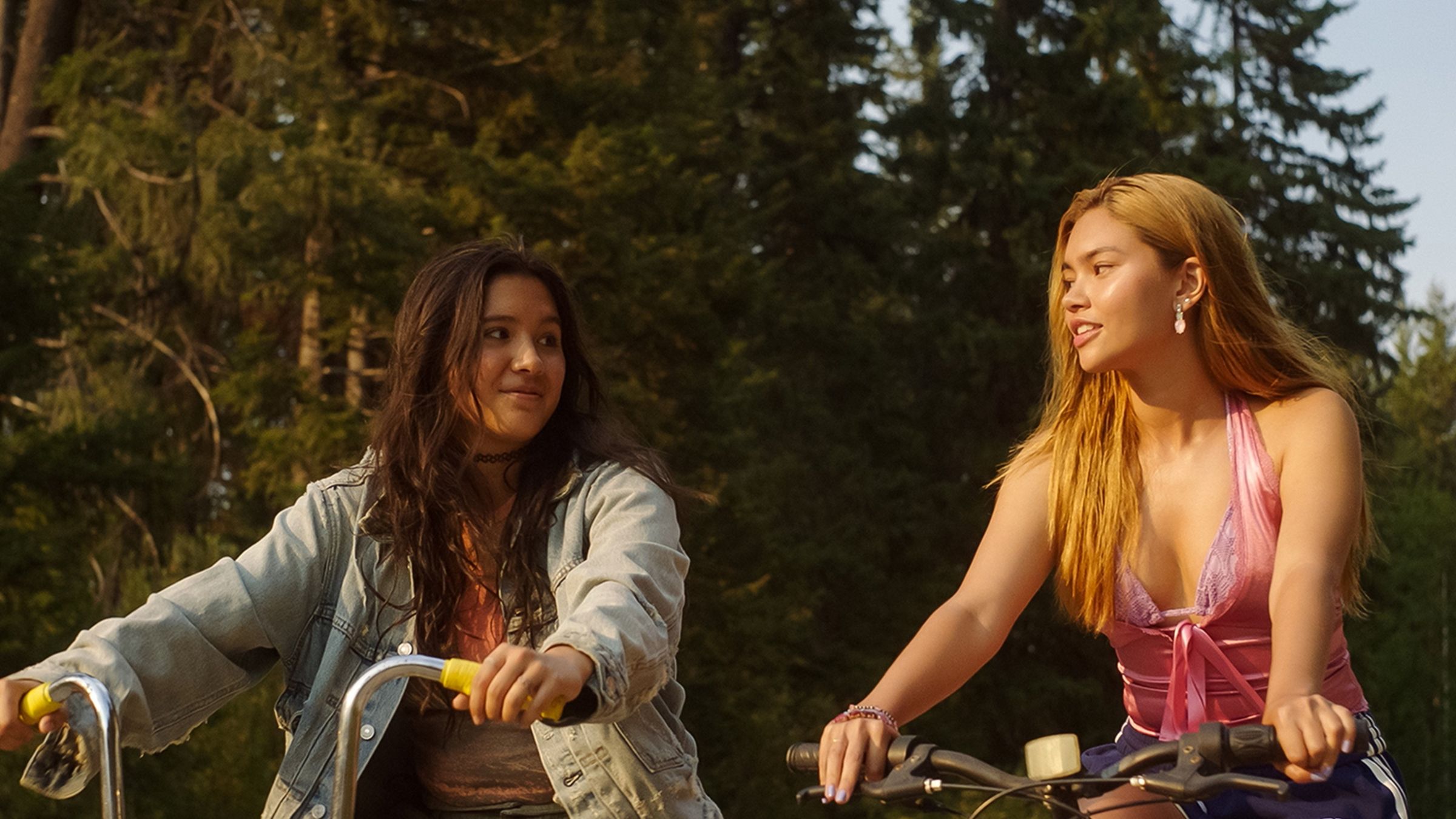
After a chance encounter with a group of teens, Colby develops a bond with Myra Malloy's Sonya, a local popular girl. Stolen booze, online chats, and constant hangouts gradually turn their connection romantic – only for some genuinely grounded complications to arise. There's a deep authenticity to Girls Like Girls that is undeniable, stemming largely from how much this story means to Kiyoko.
Having adapted her own song into a YA novel that serves as the basis for the film, Kiyoko brings earnestness and reality to Colby's arc that gives the bittersweet love story a prickly and heartfelt edge. Colby and Sonya are both deceptively complex takes on teen archetypes, with tricky layers that the stars relish in unpacking.
De Costa shines in a role that could give way to broad outbursts or detached apathy, but she keeps Colby's longings, pains, and anger grounded enough to never feel false. Molloy gets to play a bit more of an arch role as the object of Colby's affection, but the gradual reveal of Sonya's own trepidation, cruelties, and vulnerabilities makes for a rich contrast and scene partner for De Costa.
This all infuses Girls Like Girls with a natural exploration of queerness without making the movie fully about that, which is a pleasant development. Instead, the file is a softly colored and emotional love story first and foremost that will feel nostalgic for anyone who has experienced that kind of love.
That emotional authenticity is key to Girls Like Girls, which could have otherwise suffered from the relatively basic nature of the story. It’s a narrative that will be familiar to anyone who has seen a coming-of-age romance. However, that focus comes at the cost of a more complex supporting cast.
There isn’t a lot of unexpected material or shocking swerves, although the narrative isn’t afraid to let little moments of reality settle in and knock characters around. As the focus is so keenly on Colby and Sonya, there isn’t much depth afforded to the other teens in Sonya’s friend group or an ill-advised hook-up who comes into the film almost as quickly as she leaves it.
Colby’s father – a potentially compelling contrast to Colby, who ends up spending much of the film removed from the narrative. The cast does what they can with the roles – Braff, in particular, seems well-suited to the flawed but good guy that Curtis proves to be – but the character lacks the sort of depth that could really improve the film.
Girls Like Girls thrives on the vibes of young love and furtive discoveries about yourself, with that emotional vulnerability elevating the familiar story.
No stranger to being in front of the camera or behind it, Kiyoko's feature-length debut as director is confident in its softness, with a bluntness of reality that can effectively give way to little flights of fantasy through solid editing and effective scoring. It’s a movie attuned to the music of the era, speaking to Kiyoko’s experience as a songwriter and music video director.
Girls Like Girls doesn’t reinvent the wheel, but it’s not necessarily trying to. Instead, the focus seems to be on bringing life to a deeply personal story, giving it over to a compelling cast to embody it, and showcasing it on the biggest stage possible. Girls Like Girls works best as a coming-of-age romantic dramedy, a far cry better and more authentic than a lot of other recent genre entries like Regretting You.
The fact that it’s a feature debut for its star and director makes it all the more impressive that it’s as tightly constructed and emotionally vulnerable as it is. It all becomes more prevalent and powerful as the film goes on. Girls Like Girls is an emotionally effective, if familiar, story about love that is soft enough to overcome most trope hang-ups.