Julio is a Senior Author for Collider. He studied History and International Relations at university, but found his calling in cultural journalism. When he isn't writing, Julio also teaches English at a nearby school. He has lived in São Paulo most of his life, where he covers CCXP and other big events. Having loved movies, music, and TV from an early age, he prides himself in knowing every minute detail about the things he loves. When he is older, he dreams of owning a movie theater in a small countryside town.
Everyone knows Spock (Leonard Nimoy) as probably the most influential character in science fiction. Whenever you mention the genre to people who aren't that familiar with it, everyone tends to know at least the Vulcan salute or "Live long and prosper." As iconic as those are, however, they are far from being the finest our favorite half-Vulcan has to offer. With so much of him on Star Trek, from The Original Series to the movies, it might seem difficult to pinpoint Spock's best moment, but look no further than Star Trek II: The Wrath of Khan and his iconic line: "The needs of the many outweigh the needs of the few." It captures his essence perfectly, and is definitely among pop culture's most misquoted and misunderstood lines.
There are certain quotes that break the barriers of genre and media to reach even those who are oblivious to where it comes from, often resulting in them being delivered out of context or with completely different intentions than what they are really about. Spock's "The needs of the many" is one such case. He says it not once, but twice in The Wrath of Khan, and both are all about his arc in the movie, but barely anyone outside the Star Trek fandom remembers or even knows the context.
Your answers point to the world your instincts were built for. This is the universe your temperament, your survival instincts, and your particular brand of stubbornness were made for.
You took the red pill a long time ago — probably before anyone offered it to you. You're a systems thinker who can't help but notice the seams in things.
The wasteland doesn't reward the clever or the well-connected — it rewards those who are hard to kill and harder to break. That's you.
You'd survive here because you know how to exist in moral grey areas without losing yourself completely.
Arrakis is the most hostile environment in the known universe — and you are precisely the kind of person it rewards.
The galaxy far, far away is vast, loud, and in a constant state of violent political upheaval — and you wouldn't have it any other way.
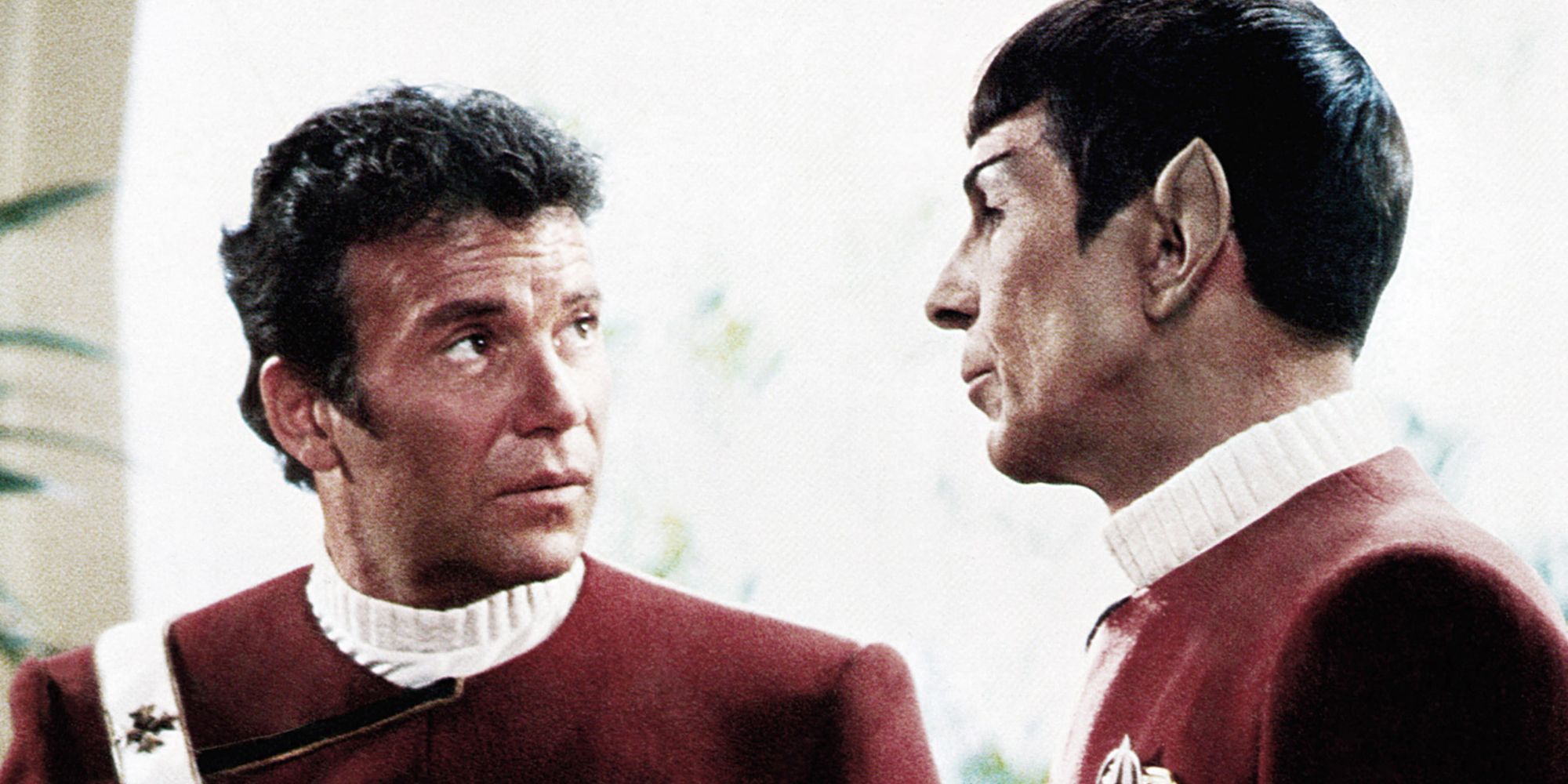
First, he says it to his old pal, Admiral James T. Kirk (William Shatner), when what starts as a training course for cadets aboard the Enterprise suddenly becomes an actual high-stakes mission. Spock is the ship's captain, but tells Jim that he should take command, since he is the senior officer and the regulation commands it. Jim repeatedly refuses, but Spock reaffirms it as a must for that mission, given the circumstances, stating that "the needs of the many outweigh the needs of the few," to which Jim completes: "Or the one."
Later, after Khan (Ricardo Montalbán) attempts to deliver his final blow against the Enterprise, the ship's warp drive is damaged, making it impossible for them to escape. Spock then decides to go into the radiation-flooded engine room to restore power, sacrificing himself while locking his friends out. In his final moments, he and Jim recite the "needs of the many" quote again, but with the deliveries reversed, and Spock finishes it with "The one." So, in the movie, it's all about Vulcan logic and sacrifice.
Thankfully, situations like the one that requires Spock's sacrifice aren't that common in the real world, but his "The needs of the many" line is still delivered quite often, and in contexts where it doesn't apply at all. It's usually taken as a way to justify unfair decisions based on a simplistic calculation of cost over consequence, where benefiting the majority is worth overlooking the needs of minorities, often going so far as the majority imposing their will on the minorities, and that's not what it is about at all.
To fully understand it, we need to look at why it exists. "The needs of the many" goes back to utilitarianism, an ethical theory which states that the most moral course of action is always the one that achieves the greatest good for the greatest number of individuals, and this is intrinsically tied to Vulcan nature. They are known for their sometimes annoying predilection for logical reasoning over anything else; so, when Spock says that to Jim in both circumstances, he is taking a selfless stance, as he understands himself to be the minority.
Gene Roddenberry's other sci-fi series is a fantastic 5-season adventure.
However, utilitarian ethics is favored by the Vulcans for a very good reason. As distant genetic "cousins" to the vicious Romulans, they are actually deeply emotional individuals, and had to learn over millennia how to coexist amongst themselves. For Vulcans, "the needs of the many outweigh the needs of the few" is about survival of the species, not intellectual or moral high ground. Otherwise, a single individual may lead to a crisis that puts the collective in danger because of individual wills.
You may tell yourself you would also sacrifice yourself if you were in Spock's shoes in that scene in The Wrath of Khan, but the truth is that most of us wouldn't. He does what he does because, despite being half-human, he was raised Vulcan, so Spock understands what true selflessness demands when the need arises, and understands that such decisions aren't available to everyone. Kirk, for example, never once considers it, because his goal has always been to save everyone, not the majority.
People also forget (or simply don't know) that the very next movie, Star Trek III: The Search for Spock, actually reverses the "Needs of the many" line to great effect, as Jim and his crew figure out how to bring Spock back once they learn how. Spock even left a "fail-safe" of sorts behind, too, because he knew that the truth of his sacrifice was purely circumstantial, not a fail-proof ethical truth. Deep down, we all know that saving everyone is the only objectively right thing to do, and Spock would kind of agree, too.
All these reflections are what make "The needs of the many" the greatest quote in science fiction. It's a simple and rather straightforward line, but one that evokes the kind of moral questioning that's typical of the best works of the genre. Star Trek particularly excels at this kind of provocation, turning human ethics and morals into poignant moments that really put them into perspective. So, next time someone pulls out the trolley problem and delivers this banger, feel free to let them know that this isn't what the line is about at all.