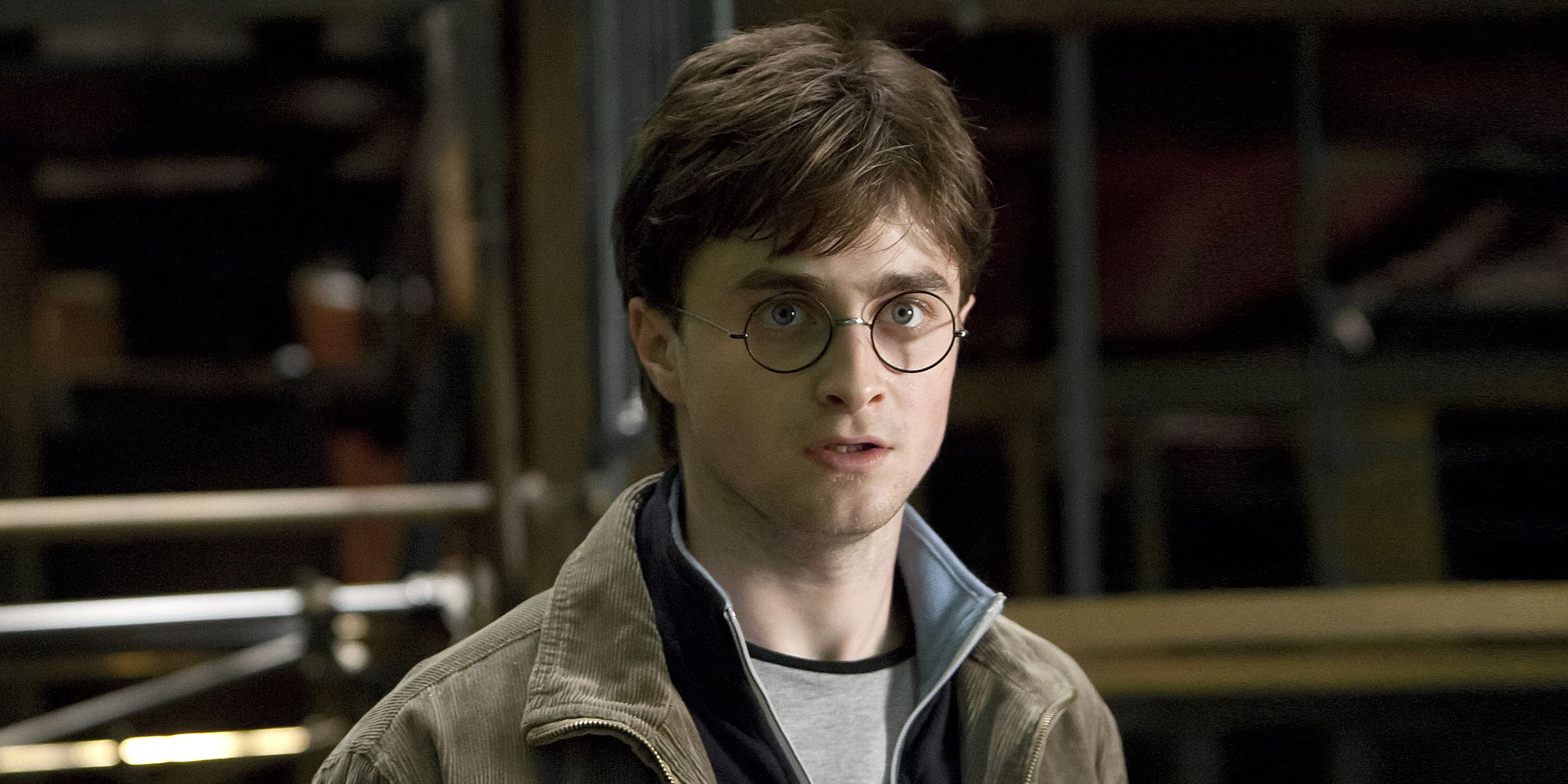
Few fantasy heroes in the current culture are as immediately recognizable as Harry Potter. The Boy Who Lived was at the center of one of the largest and most popular fantasy franchises that dominated both books and film for well over a decade, and it continues to be massively popular. Warner Bros. has invested a staggering amount of money into a new series adaptation of the novels, banking on fans having enough nostalgia for the character to make it worth the time, money, and effort. Whether or not that upcoming series is able to escape the shadow of the immensely successful films remains to be seen, but regardless, Harry Potter will remain an immensely beloved hero — that doesn’t mean he’s the most likable, though.
As portrayed by the very likable Daniel Radcliffe in eight films, the character received a fair amount of depth, portrayed with the emotional volatility of an adolescent going through growing pains but imbued with emotional maturity beyond his years. He could also be a whinging, self-centered muppet who was often given a gargantuan amount of leeway by some of the Hogwarts staff because of his traumatic past. You know who else suffered tragically at the hands of Voldemort yet continually got the crap end of the broom without ever acting like a stubborn jerk? Neville Longbottom. And just like Neville, other fantasy heroes are deserving of more praise than Harry bloody Potter, and these are ten of them.
Rob Reiner's fantasy comedy classic The Princess Bride is filled with likable and memorable characters. Every role is impeccably cast, and every actor gets a moment to shine. When a supporting cast is this colorful, it's often that the blander hero gets left in the dust, but that's certainly not the case for Carey Elwes' charming rogue Wesley. Quick-witted and even quicker with a sword, Westley is the kind of dashing and devoted hero that fantasy stories are filled with, further elevated by Elwes' brilliant comedic timing and ability to balance self-awareness with genuine emotion. It's the same magic that makes The Princess Bride such a timeless classic, and who wouldn't rather have Wesley come to save them over Harry Potter?
Beginning as a humble farm boy hopelessly in love with the fair maiden Buttercup (Robin Wright), Wesley goes missing and returns years later to find her unfortunately betrothed to Chris Sarandon's comically loathsome Prince Humperdinck. He fights with his wits and his brains to save Buttercup, all with a smirk and charm reminiscent of the classic screen heroes played by Errol Flynn and Douglas Fairbanks. Elwes is perfectly cast as Wesley, and while he'd amp up the comedic absurdity to parodic levels for his role in Mel Brooks' Robin Hood: Men in Tights, he's never been more likable.
You can't bring up The Princess Bride without talking about its true hero, Inigo Montoya. As a revenge-driven swordsman who goes from criminal to drunken wretch to reinvigorated hero, Montoya is never anything less than compelling, and is made immensely likable by Mandy Patinkin's iconic performance. He is at the center of some of The Princess Bride's most memorable scenes, whether it's his charming first swordfight with Wesley, the comedy gold of haggling with Miracle Max, or his emotionally climactic duel with the six-fingered man who killed his father.
When introduced as one third of the criminal trio that includes Wallace Shawn's temperamental and loquacious Vizzini and Andre the Giant's gentle giant Fezzik, Montoya seems to be just another roguish swashbuckler. It's when he reveals his backstory to Westley that we understand the full depth of his pain, which Patinkin plays with absolute sincerity. The character's famous repeated line is delivered with conviction every time, and the actor brings a different flavor to it every time. He's ferociously funny, unexpectedly moving, and undeniably likable. In a movie where every character is a classic, Inigo Montoya reigns supreme.
Developed by producer George Lucas and directed by steady hand Ron Howard, the '80s fantasy cult film Willow may not have left a cultural footprint remotely close to the size of the Harry Potter franchise, but it's beloved by its fans and features a terrific lead performance by the tremendously likable Warwick Davis. The actor originally got his start playing the fan favorite Ewok Wicket in Return of the Jedi and has appeared in all kinds of sci-fi and fantasy franchises, including Harry Potter. The actor is awesome and underutilized, and Willow is one of his best characters.
Willow is a Bilbo Baggins-esque figure from a town of little people referred to as Nelwyn, who has adventure thrust upon him when he discovers a baby prophesied to bring down an evil sorceress. She sends her legions to kill the child, so Willow reluctantly leads an expedition to return the child to safety. In his quest, Willow is joined by the roguish anti-hero Madmartigan (Val Kilmer), and a lesser actor would have been blown off the screen by the movie star. Yet Davis imbues Willow with a decency that makes him infectiously likable. While not a success at the box office, Willow has more than enough magic to take on the star of the Wizarding World.
The scores below reveal your true character. Your highest number is your match. Even a tie tells a story — the Fellowship was never made of simple people.
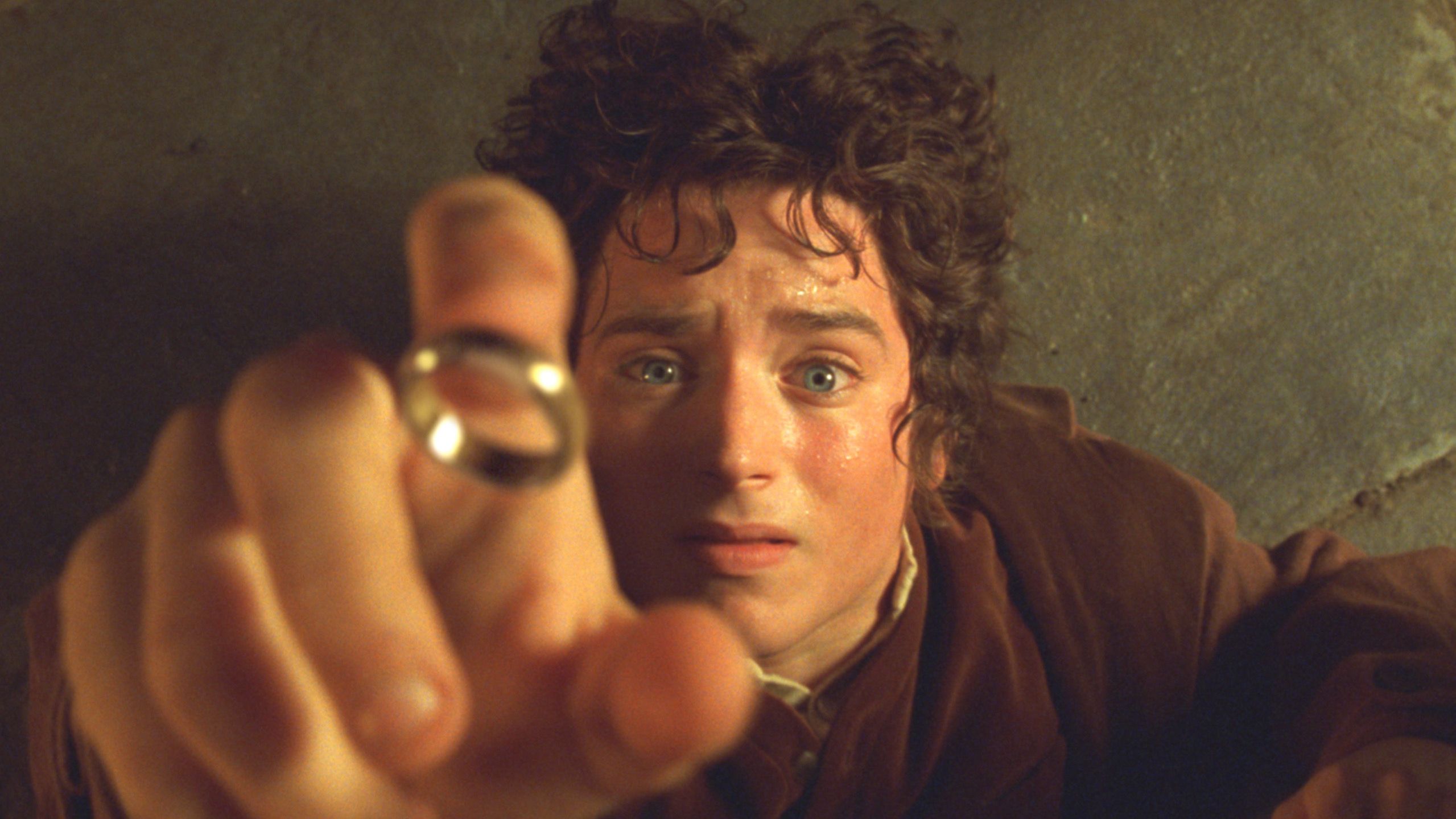
You carry something heavy — and you carry it alone, even when you don't have to. You were not born for greatness, and that is precisely why greatness chose you. Your courage is not the roaring, sword-swinging kind; it is quiet, stubborn, and terrifying in its refusal to quit. The Ring weighs on you more than anyone can see, and still you walk toward the fire. That is not weakness. That is the rarest kind of strength there is.
You are, without question, the best of them. Not the most powerful, not the most celebrated — but the most essential. Your loyalty is not a trait; it is a force of nature. You would carry the person you love up the slopes of Mount Doom if it came to that, and we both know you'd do it without being asked. The world needs more people like you, and the world is lucky it has even one.
You were born to lead, and you have spent years running from it. The crown is yours by right, but you know better than anyone that right means nothing without the will and the worthiness to back it up. You are tempered by loss, shaped by long roads, and defined by a code of honour you hold to even when no one is watching. When you finally step forward, the world shifts. Because it was always waiting for you.
You have seen more than you let on, and you say less than you know — which is exactly as it should be. You are a catalyst: you do not fight the battles yourself, you ignite the people who can. Your wisdom comes not from books but from an age of watching what happens when it is ignored. You arrive precisely when you mean to, and your presence alone changes what is possible. A wizard is never late.
Graceful, perceptive, and almost preternaturally calm under pressure — you see things others miss and act before others react. You do not need to make a scene to be remarkable; your presence speaks for itself. You are loyal to those you choose to stand beside, and that choice is not made lightly. You have lived long enough to know that the most beautiful things in this world are also the most fragile, and that is why you fight to protect them.
You are loud, proud, and absolutely formidable — and beneath all of that is one of the most fiercely loyal hearts in Middle-earth. You don't do anything by half measures. Your friendships are forged like iron, your grudges run as deep as mines, and your courage in battle is the kind that makes legends. You came into this fellowship suspicious of everyone and ended it willing to die for an elf. That is not a small thing. That is everything.
You think in centuries and act in absolutes. Order, dominion, control — not because you are cruel by nature, but because you have decided that the world left to itself always falls apart, and you are the only one with the vision and the will to hold it together. You were not always this. Something was lost, or taken, or betrayed, and the version of you that stands now is the answer to that wound. The tragedy is that you're not entirely wrong — just entirely too far gone to course-correct.
You are a study in contradiction — pitiable and dangerous, cunning and broken, capable of both cruelty and something that once resembled love. You are defined by loss: of innocence, of self, of the one thing that gave your existence meaning. Two voices war inside you constantly, and the tragedy is that the better one sometimes wins, just not often enough, and never at the right moment. You are a warning, yes — but also a mirror. We are all a little Gollum, given the right ring and enough time.
There's something about pure innocence that makes a character impossible not to like, and there are few fantasy heroes more innocent than the titular character in Tim Burton's suburban fairytale Edward Scissorhands. The juxtaposition between Burton's gothic design of the character, created in collaboration with Stan Winston, and Johnny Depp's gentle childlike performance gives Edward an ethereal quality that permeates the entire movie around him. In many ways, Edward is the quintessential Tim Burton protagonist, a tragic hero whose purity was too good for the rest of the world, ultimately dooming him to a life of solitude.
Left alone in a castle after his creator (Vincent Price) dies, Edward is found by Dianne Wiest's kindly Avon lady, who brings him to her pastel home in the suburbs. Despite her and the rest of her family's attempts to integrate Edward into their so-called normal society, jealousy and fear spread among the suburbanites. Burton excels at films featuring misfits who fail to conform, whether it's Jack Skellington in The Nightmare Before Christmas or the titular character in Pee-wee's Big Adventure, but Edward is his most clearly autobiographical. Burton treats this misfit with an even greater level of empathy and warmth, and the character is by far his most likable hero.
In fairness to Harry Potter, when it comes to likability, it's hard to compete with a talking pig. Even so, speech is no guarantee that a pig is going to be likable; just look at the villains from Animal Farm or the titular character of Gordy. That latter had the misfortune of coming out only a few months prior to Babe, and has forever lived in the charming, sheep-herding piglet's shadow. There's an alchemy in the combination of animal performers, animatronics, and the voice of Christine Cavanaugh that is special, even among other cinematic talking animals.
The film, which is based on the novel The Sheep-Pig by Dick King-Smith, follows the orphaned piglet as he is brought to Hoggett Farm, where he's prepped to become a ham dinner before he proves his worth as an unlikely sheep herder. It's the kind of family-friendly fantasy film that could easily be cloying, but instead is just effortlessly charming, much like the titular pig. Canavanaugh, who is best known for voicing Chuckie in Rugrats and Dexter in Dexter's Lab, brings a softer tone to the character, imbuing Babe with an earnestness that matches his lovable pink exterior. It's not recommended that anyone should be trying to own pigs as house pets, but it's not hard to see why they would want to after watching this little porcine charmer.
Everybody needs a friend like Samwise Gamgee. This Hobbit from The Lord of the Rings was considered the chief hero of the trilogy by its author J.R.R. Tolkien, and that is reflected in his screen portrayal by Sean Astin in Peter Jackson's epic film adaptations. With an unwavering loyalty and moral conviction that even the power of the One Ring can't corrupt, Samwise is the platonic ideal of a sidekick, but he's so much more than just that for Frodo. Without Sam, it's undeniable that Frodo likely would have succumbed to the influence of Sauron and all of Middle-earth would have fallen.
There are a dozen different moments of Sam's heroism that you could pick out as his best, whether it's his stubborn refusal to let Frodo go it alone in The Fellowship of the Ring, his inspiring speech at the end of The Two Towers, or his defiant face-off with the giant spider Shelob in The Return of the King. Most fans would likely list his final heroic act of carrying Frodo into Mount Doom at the climax of their journey, but there's also something quietly special in the moment Sam takes his furthest steps out of the Shire at the beginning. The Hobbit has no idea of what perils await him, but he's ready to face all of them for his friend. Samwise is one of the best fantasy heroes, and Astin's inherent likability made him the perfect choice for the character.
Will Ferrell is one of the most gifted comedic talents to come out of the '90s. Beyond his character work on Saturday Night Live, the actor proved a consistently hilarious presence in movies in the 2000s. While most of his characters were of the more arrogant variety, like Ron Burgundy and Ricky Bobby, he also gave audiences an all-time icon with the impossible-to-dislike Buddy in the Christmas fantasy favorite Elf. Fish-out-of-water stories like this often become dull because they repeat the same jokes ad nauseam, but Ferrell has such an infectious and lovable energy to his performance that it makes his antics endlessly entertaining.
Buddy is a human child who hitched a ride in Santa's bag one Christmas, and has since been raised as an elf in the North Pole. When he discovers his true parentage, he makes a pilgrimage to New York City to meet his real father, played by professional curmudgeon James Caan. Ferrell makes jokes as broad as eating gum stuck to a subway entrance or as simple as pressing all the buttons in an elevator effortlessly, and they all feel tied to who Buddy is as a character. He's filled with wonder and endlessly curious about the world around him, and we could all stand to be a little bit more like Buddy.
A character who shares more than a few qualities with Buddy, Enchanted's Giselle is a bubbly princess transplanted from her magical kingdom to New York City, where her infectious energy and musical spirit enchant every character she meets. It's another character that could become grating in the hands of a different actor, but Amy Adams weaponizes her charm to make Giselle lovable and aspirational. She sings and dances across the screen in a manner befitting a Disney princess, and Adams is guileless in the role.
Like many Disney princesses before her, Giselle dreams of meeting her Prince Charming and living happily ever after, but after she's transported into the real world, she meets a dreamy divorce attorney who challenges her optimism. Like Buddy or Edward Scissorhands, Giselle is a magical character who instigates more growth in those around her than they do in her, but just because she doesn't have any more dimension than her 2D animated counterparts doesn't make her any less endearing. Adams is incapable of being insincere as an actress, and she makes Giselle truly feel like she's stepped out of an animated fantasy.
Hiccup from the How to Train Your Dragon franchise probably has the most outward similarities with Harry Potter. Both are young protagonists who exist in magical worlds and have had extraordinary expectations placed on their shoulders. While Harry wants nothing more than to live up to the example set by his heroic parents, Hiccup finds himself directly at odds with what his father expects from him. It's that distinction that makes Hiccup all the more compelling in his first adventure. He's empathetic, courageous, intelligent and awkwardly charming, all of which makes him eminently likable.
Voiced by Jay Baruchel, Hiccup is the antithesis to his heroic Viking father Stoick (Gerard Butler), the leader and dragonslayer of their village. Hiccup is a more intellectual sort who invents weapons to fight the winged beasts, one of which helps him down an infamously dangerous dragon. Upon discovering that the feared Night Fury is a gentle animal, he bonds with it, giving it the name Toothless, and together they try to bring peace between their two species. How to Train Your Dragon was an unexpected masterpiece from DreamWorks, featuring some breathtaking visuals, spectacular action and surprising emotional depth, and it all rests on its unlikely but likable hero.
Encanto is a fantasy musical with vibrant visuals and instantly memorable songs by Lin-Manuel Miranda. It explores themes of family identity and generational trauma through magical realism and Colombian culture, which informs all of its characters, including its hero. Voiced by Stephanie Beatriz, Mirabel is an ordinary girl living in a magical world. As the only Madrigal without a magical gift, Mirabel should have a mountain-sized chip on her shoulder, especially given the constant reminders that she isn't "special." Instead, the bubbly, quirky character takes it all in stride, even though she feels excluded from her family.
Mirabel's exclusion is only exacerbated when she begins to see fractures in the magic that built her family's home and gave them their powers. Her attempts to save her family are thwarted not by some malevolent evil force or character, but by her demanding Abuela. The familial struggle within Encanto is relatable regardless of the cultural specificity of the story, and Mirabel is likewise a relatable hero with all the quirks and flaws inherent to a teenager, even one without magical family members. Beatriz brings both a bubbly energy and an impressive vocal range in her performance, making Mirabel an irresistible character who shows Harry Potter that you don't need magic to be magical.