When it comes to science fiction cinema, it’s only been in the last few decades that live-action films have had the visual effects technology available to bring their most fantastical concepts to life. While visuals aren’t enough to elevate a sci-fi narrative, they can make up for some shortcomings, and in the animation medium, filmmakers have had a distinct advantage over their live-action counterparts. Animated sci-fi films have provided decades worth of visually breathtaking entertainment, often alongside thought-provoking ideas or highly creative plots. In the last 50 years, especially, there has been no shortage of animated sci-fi masterpieces, many of them among the greatest sci-fi films ever made.
The best animated sci-fi films released in the past five decades represent the breadth of the genre and the medium. From traditional to computer animation and stop-motion as well, these films also offer everything from family-friendly Disney films to R-rated anime. Even among that variety, there are also some startling similarities between the films as well. Friendly robots, retro-futuristic aesthetics and cyberpunk dystopias all recur in more than one of the greatest animated sci-fi films of the last 50 years.
While Disney Animation Studios is traditionally known better for its fantasy films, they have occasionally dipped a toe or two into the waters of science fiction. Among their best sci-fi movies are major hits like Lilo & Stitch, cult favorites like Treasure Planet, and the action-packed Atlantis: The Lost Empire. Inspired by the work of Jules Verne and featuring a visual style heavily influenced by production designer and Hellboy creator Mike Mignola, it’s a steampunk pulp adventure that’s only gotten better with age.
Directed by Gary Trousdale and Kirk Wise, who previously collaborated on Beauty and the Beast and The Hunchback of Notre Dame, the film is just as distinct as those two prior efforts are from each other. Set in the early twentieth century, it follows cartographer Milo Thatch (Michael J. Fox) as he leads an expedition to the titular fabled lost city. There’s lots of explosive action, a colorful cast of supporting characters, and a solid adventure plot. Atlantis is a fun romp that was generally dismissed by critics at the time and unfortunately ignored by audiences, but which has found its own fans in time.
From one extreme to another. Mad God is the mad masterpiece from master animator and visual effects pioneer Phil Tippett, who spent decades in production on the film. The film was Tippett’s passion project, a surreal sci-fi horror nightmare that’s light on plot, but heavy with a dreadful atmosphere and imagery that vacillates between grotesque and hauntingly beautiful. It’s absolutely not for everyone, but if you’re the kind of sci-fi fan that enjoys a film based on vibes alone, there’s a lot of dark pleasure to be had with Tippett’s movie.
It takes place in a destroyed future, where an unnamed, gas mask-wearing protagonist ventures into an absolute hellscape populated with an assortment of mutated and mechanical monstrosities. The creature designs are sickeningly creative, and the film’s entire tone is bleak and apocalyptic, which makes stop-motion the perfect medium for it. There’s always been a surreal quality to the movement in the animation technique, which filmmakers have used to both charm and terrify for decades. Mad God is the result of what happens when a mad genius is creatively untethered.
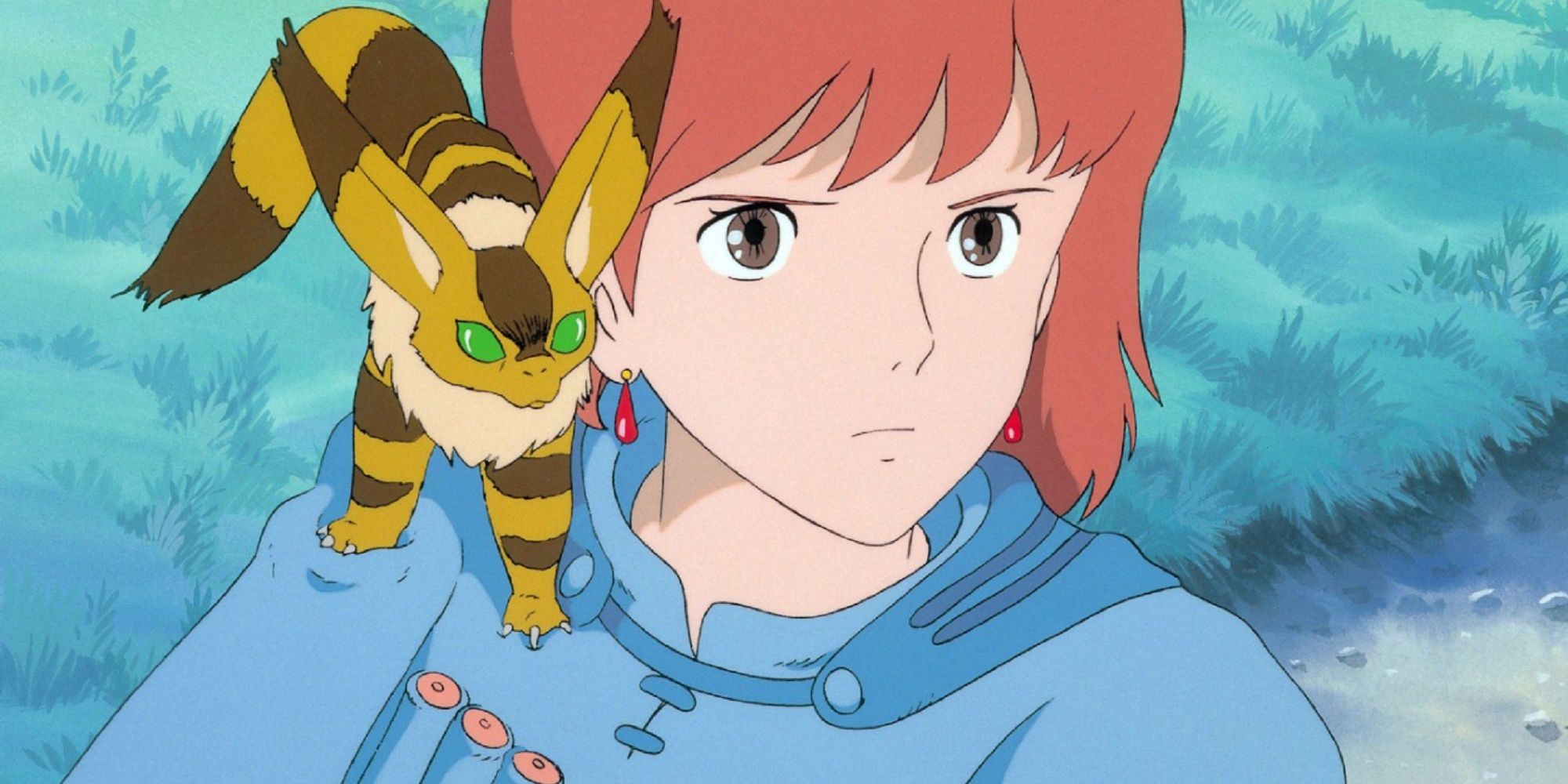
Much like Tippett, Hayao Miyazaki is a one-of-a-kind talent, and while his output veers more toward fantasy, his film Nausicaä of the Valley of the Wind is a seminal sci-fi anime. Based on Miyazaki’s own manga, the film takes place in a kind of post-apocalyptic steampunk world. Its aesthetic alone has influenced dozens of other films and creators, even if it has been eclipsed by the director's more internationally acclaimed efforts like Spirited Away. Part of that may have to do with the film’s original botched American release, which was heavily edited against Miyazaki’s wishes. It was given a proper English dub re-release in the 2000s more worthy of its director’s stature.
Nausicaä (Sumi Shimamoto/Alison Lehman) is a princess of the Valley who finds herself drawn into a conflict between two separate warring empires regarding the fate of the Toxic Jungle that surrounds her kingdom. It’s a film tangled deeply in the same thematic roots of environmentalism and pacifism that also anchored Miyazaki’s later film, Princess Mononoke. While the latter is perhaps a bit more nuanced in its approach, as is the original manga, there’s no denying Nausicaä's beautiful artistry and overall influence. It’s an iconic animated sci-fi film by an iconic filmmaker.
Friendly robots feature in many animated sci-fi films, both as supporting characters and protagonists. These include enjoyable family-friendly movies like Big Hero 6 and The Wild Robot, but for the purest charm and deepest emotional resonance, it’s hard to beat Robot Dreams. Based on the graphic novel of the same name by Sara Varon and directed by Pablo Berger, this minimalist, dialogue-less film offers a beautiful relationship between a dog and a robot with a bittersweet resolution.
Set in New York City in the '80s, it follows a dog who assembles himself a robot friend. The two spend the day together but then become separated, and their lives continue independently, each trying to find their way back to the other. There’s such simplicity in the animation style and storytelling that makes Robot Dreams even more unexpectedly moving. It’s a tender examination of loneliness, nostalgia, and the sometimes fleeting nature of friendship.
Superhero films invariably fall into the sci-fi genre, and there are a select few animated classics among them. When it comes to the best, it really comes down to Brad Bird’s The Incredibles and those entries in Sony’s Spider-Verse. Both Bird and Pixar will be represented later in this list, and there needs to be some recognition of the immense influence the Spider-Verse has had on sci-fi and animation. Spider-Man: Into the Spider-Verse introduced the concept of the multiverse into mainstream blockbuster cinema and presented it with a striking and unique animation style. Its sequel, Across the Spider-Verse, expanded it exponentially both visually and narratively.
Picking back up with protagonist Miles Morales (Shameik Moore), the film pulls him back into the larger Spider-Verse where he meets the Spider-Society who fight against threats across their shared universe. Introducing concepts such as canon events, the film both expands the series’ themes of identity and individuality while also serving as the direct narrative result of its predecessor’s plot. The expansion of the multiverse is also visually represented in the film’s even more vibrant and varied animation styles. Across the Spider-Verse is a visual feast for the eyes and a treat for fans of both Spider-Man and science fiction.
Pixar's WALL-E may have some competition for friendliest movie robot, but he's definitely the most adorable. In the acclaimed studio's sci-fi masterpiece, the trash-compacting robot is at the center of a love story that also serves as a dire warning about how we treat our planet and how reliant we're becoming on technology. Directed by Andrew Stanton, WALL-E is gorgeously animated, incredibly funny and beautifully heartfelt. The film was so beloved that its subsequent snubbing for a Best Picture Academy Award nomination contributed to the rule change allowing for more than five films in the category.
In a future where humans have left Earth behind, WALL-E continues to diligently do his job as the last waste management robot on the planet. When a highly advanced robot named EVE arrives to search for signs of life, the little trash bot immediately feels a spark. Their relationship develops entirely through visuals and sound design in what is the film's most affecting section. While EVE's subsequent recall to the starship that houses the whole of humanity and WALL-E's attempt to rescue her offer plenty of fun sci-fi slapstick and satire, there's something perfect about the film's first act.
Cyberpunk and anime go together like peanut butter and jelly. The neon-soaked aesthetics of the former are well served by the animation style of the latter, and some of the best animated sci-fi films from the last 50 years fall into both categories. One of the most totemic of those films is the action-packed Ghost in the Shell. Directed by Mamoru Oshii and based on the manga by Masamune Shirow, the film launched a sci-fi franchise and influenced major sci-fi films outside of anime. It's an essential sci-fi film with visceral action and a thoughtful plot about the intersection of technology, identity and consciousness.
In the far-off future of 2029, technology has advanced far enough to make the need for human bodies obsolete, and a person's consciousness can be transplanted into a cybernetic body. One such person is Major Motoko Kusanagi (Atsuko Tanaka), who leads a special assault team tasked with taking down the hacker villain known as the Puppet Master. Ghost in the Shell is a thought-provoking sci-fi film and an exhilarating action anime that is among the best of both its genre and medium.
There's only one cyberpunk action anime more iconic than Ghost in the Shell, and that's Katsuhiro Otomo's groundbreaking Akira. Adapted from the director's own manga, the film is a seminal Japanese sci-fi effort and its success internationally helped break anime through to more Western audiences. Its influence and impact aside, the film is also just incredibly entertaining, featuring fluid animation and hyperactive action sequences.
Set in the city of Neo-Tokyo, built on the ashes of the original Japanese city which was destroyed in a cataclysmic event caused by the titular psychic-powered individual, the film follows its increasingly divided factions. Kaneda (Mitsuo Iwada) leads a motorcycle gang along with his childhood friend Tetsuo (Nozomu Sasaki), in constant conflict with both rival gangs and the oppressive police. When an accident unlocks Tetsuo's latent psychic abilities, he's taken captive by the government, while Kaneda joins with the resistance in a battle for the city that threatens to decimate it all over again. Akira has been homaged and referenced by dozens of filmmakers across almost every genre, and it only continues to influence sci-fi and anime.
Your answers point to the iconic sci-fi hero who shares your instincts, your values, and your particular way of facing the impossible.
You carry a weight most people would crumble under — the knowledge of what you're capable of, and the burden of what you might have to become.
You lead with instinct, warmth, and an absolute refusal to accept a no-win scenario — because you've always believed there's a third option nobody else has thought of yet.
You are the kind of person who holds the line when everyone else is losing faith — not because you're fearless, but because giving up simply isn't something you're capable of.
You are not reckless, not grandiose, and not particularly interested in being anyone's hero — you just refuse to stop when it matters.
You have been through fire that would break most people — and what came out the other side is something the world underestimates at its peril.
The best friendly robot in an animated sci-fi movie also happens to be the biggest. Brad Bird's feature directorial debut, The Iron Giant, was inspired by the novel The Iron Man by Ted Hughes, but features all the director's hallmarks in a sci-fi adventure that is heartwarming, hilarious and visually stunning. While it was a commercial failure, often attributed to its lackluster marketing campaign, the film has since become regarded as an animated masterpiece, especially as its profile rose alongside Bird's career success.
In the late '50s, during the Cold War, young latchkey Hogarth Hughes' (Eli Marienthal) small world gets a whole lot bigger when he discovers a giant robot that has crash-landed near his tiny town in Maine. Built to be a weapon but taught by Hogarth how to be a hero, the Iron Giant (Vin Diesel) makes art in a beatnik's junkyard and faces off against an overzealous federal agent. The animation is beautiful, capturing the picturesque nostalgia of Americana with traditional hand-drawn artwork, and the high-tech machinery of the robot with CGI that blends incredibly well. The Iron Giant is classic sci-fi made with love and care.
As the last film directed by the legendary Satoshi Kon, the filmmaker behind anime masterpieces Perfect Blue and Tokyo Godfathers, the sci-fi thriller Paprika holds a special place in the history of the genre and its late creator's filmography. Based on the novel of the same name by Yasutaka Tsutsui, the film is a bold, imaginative and surreal journey into the dreamscape with dazzling visuals and a mind-bending narrative. Unlike the more structured architecture of the similarly themed Inception, Kon fully embraces the loose logic of dreams and uses animation to immerse us in nightmares.
In the film, a device has been created that allows individuals to enter the dreams of others. The protagonist, Dr. Atsuko Chiba (Megumi Hayashibara), uses the device to treat her psychiatric patients using a dream persona named Paprika. When prototypes of the device are stolen, the lines between reality and dreams begin to blur, and Paprika has to try to quell the chaos. Kon's movie is an onslaught of surreal imagery and mesmerizing sequences, but it never feels like the director is merely throwing strange visuals at you just for the sake of weirdness. There's a purpose to the images, and they blend together in a narrative that asks us to question the nature of what we consider real.