There are good sci-fi movies without amazing special effects, so you don’t necessarily need them to explore the sorts of things that sci-fi movies explore. Something like Primer is famously low-budget, and it didn’t really need elaborate special effects, for what it did as a realistic and grounded exploration of a sort of time travel.
And then there are movies with amazing special effects for scenes that take place in space, but if they're not necessarily works of science fiction (see Apollo 13, The Right Stuff, and, arguably, Gravity), then they're not going to be highlighted below. Instead, the following ranking is focused on true sci-fi movies with the best special effects in the genre’s history, and with a limit of one movie per franchise, just to keep something like Star Wars from dominating the top 10 too much.
James Cameron can often be relied on for showcasing amazing special effects, with Titanic maybe being the best example of any film of his, though that one’s also the rare James Cameron film that’s not a sci-fi movie. Thankfully, then, looking over his sci-fi stuff, you can still find movies almost just as technically impressive, including a trilogy from the 21st century (more on at least one of those films in a bit), and Terminator 2: Judgment Day from the 1990s.
Now, The Terminator did look good for 1984, especially considering its more limited budget, but Terminator 2: Judgment Day went full-on blockbuster, with all the advanced cyborgs, glimpses of a post-apocalyptic future, and explosions looking all the more impressive. It used computer-generated effects in a seamless and groundbreaking way for its time, and then all the practical stuff here still looks amazing, too.
Interstellar is easily one of Christopher Nolan’s biggest movies, and considering he’s been pretty focused on making blockbusters and/or epics for about two decades now, that’s saying quite a lot. The stakes are almost apocalyptic, seeing as the premise involves searching for another planet for humanity to live on, seeing as, to quote the David Bowie song “Five Years,” “Earth was really dying.”
Nolan does his usual thing, in terms of staying away from computer-generated imagery as much as possible, so Interstellar does feel quite practical and old-school, at least for a newer sci-fi film done on an epic scale. It’s not necessarily old-fashioned, and there are some more modern effects, but the balance is done well, and everything feels believable, with the scenes set deep in space (and especially those involving a wormhole) looking incredible.
Nothing released a century ago looks quite as great – and as grand – as Metropolis, so it feels worthy of getting a mention here for how groundbreaking it was. This was one of the earliest sci-fi movies done on an epic scale, and yes, you can tell it’s old because of the aspect ratio, the black-and-white footage, and the lack of sound… but if you just focus on the effects, you probably wouldn’t think they were from a movie that turns 100 shortly.
Plenty of science fiction movies made in its wake took some kind of influence from Metropolis. You can’t really pass it over or try to ignore it, because the whole trajectory of the science fiction genre – within cinema – would probably look quite different, and probably not as good, had Metropolis not come out when it did, and looked so impressive when it did. There is, truly, so much to be wowed by here, even to this day; in what's almost 2027, as opposed to 1927.
Even if 2023 was not that long ago, in the overall scheme of things, Godzilla Minus One does feel worthy of being considered one of the best Japanese films of the century so far, and maybe even of all time, too. To narrow the scope, though, and look at the technical side of things, it represents the best its titular monster has ever looked, and that’s the main reason why it’s worth being added to a ranking like this.
That’s no small feat, to have the best-looking and most believable version of Godzilla, since the monster has appeared in almost 40 movies now, and some of them did have significantly beefier budgets than Godzilla Minus One had. That was a talking point that proved hard to escape, when the movie came out: the fact that it looked so good with a budget that was quite modest for something so ambitious, but it was a talking point for a reason. The effects Godzilla Minus One had really were quite incredible.
1982 was such a good time for sci-fi that one of the all-timers released that year has to be left off for present purposes: E.T. the Extra-Terrestrial. That one does have great special effects, and is definitely at the same level of quality overall as The Thing and the 1982 sci-fi movie worth mentioning here, Blade Runner, but The Thing and Blade Runner impress perhaps even more on the effects side of things.
With The Thing, it does come down to the creature being so well-executed. The alien that terrorizes the main characters of this movie can transform and mimic life forms it’s killed, with the transformations looking grotesque, and the practical effects honestly being close to flawless. Those effects here do for aliens (or this particular kind of alien) what the effects in An American Werewolf in London did for werewolves.
So, to stick with 1982 for one more movie, here’s Blade Runner. An honorable mention should go out to the sequel, Blade Runner 2049, which did a lot to vividly portray the same dystopian world established in the first movie 30 years later, and the movie itself was made over 30 years later, so it could utilize a great deal more modern technology for the visuals and effects.
It's hard to imagine someone feeling let down by what Blade Runner offers on a technical front.
Yet the original Blade Runner might well look better, or at least, it looked even more impressive for its time than Blade Runner 2049 looked by the standards of 2017. You can watch Blade Runner and feel unmoved – or even bored – by what’s going on narratively and thematically (which is strange, but hey, you do you), yet it’s still hard to imagine such a person feeling let down by what Blade Runner offers on a technical front. It’s one of the best-depicted futures seen in any work of science fiction so far, throughout all of cinema history.
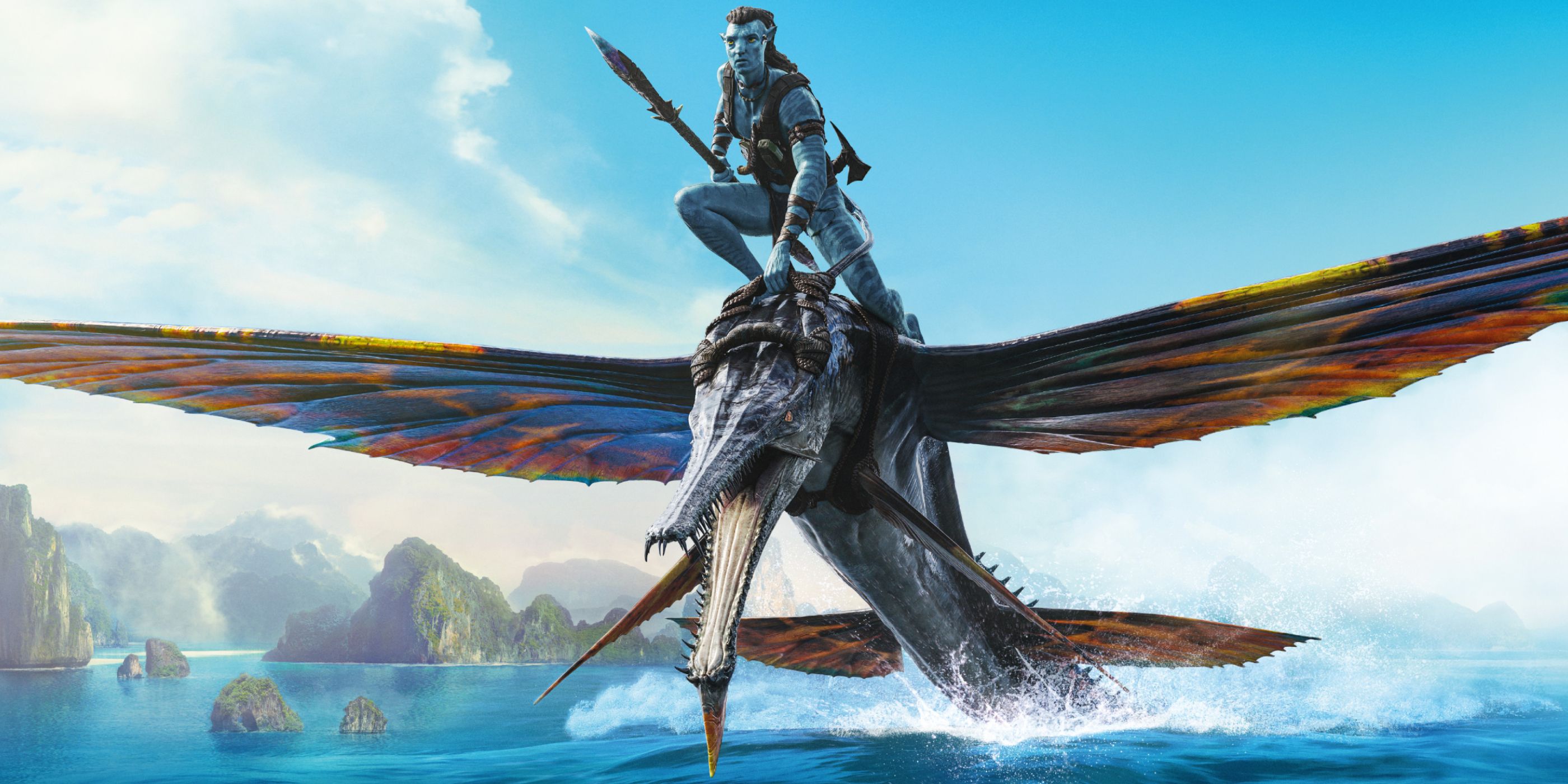
The first Avatar could fit her quite well, and so could the third, but the “best” one is going to be Avatar: The Way of Water, if you're looking at the trilogy in terms of the special effects seen throughout. The first one might well have done the most, and been the wildest to witness for the first time and all, but the second one did represent a significant leap forward, on a technical front.
You can still be impressed by Avatar (2009), but if you go straight from watching it to watching the second one, the leap forward in technology is immediately evident, and it’s honestly surprising that they could improve already incredible special effects. Avatar: Fire and Ash is more in line, visually, with what you see in the second one, certainly not being as much of an elevation or escalation (still packed with amazing special effects, though, so worthy of an honorable mention here).
Dinosaurs have never looked better than they did more than 30 years ago, in Jurassic Park. Maybe that’s a little disheartening to consider that such creatures brought to the big screen haven’t been surpassed – or even equaled – in all that time. Then again, if you want to be less cynical about it, maybe it has something to do with the original Jurassic Park being just that impressive.
Its sequels mostly look good, though the Jurassic World films haven’t ever really had the same wow factor, nor were they nearly as impressive for the 2010s or 2020s the same way the first Jurassic Park was absolutely staggering for the 1990s. And it’s still easy to get swept up in what you're seeing when you watch this today. It was the gold standard for effects in the first half of its decade, alongside Terminator 2: Judgment Day, with both being early showcases for what you could do with computer-generated imagery (especially when you had that alongside very strong effects of a more practical/physical nature).
1977’s Star Wars was the biggest leap forward technologically, in the sense of giving people something new and also making space feel truly exciting and dynamic. And then there were all the cutting-edge effects used for creatures, vehicles, and weapons… it’s endlessly impressive, on that front, and yet The Empire Strikes Back was a refinement and improvement of what already worked in just about every way it could've been.
The Empire Strikes Back has absolutely perfect special effects, and they're the kind that look great, even if you're already expecting greatness on account of what you’ve just seen in the first movie. There are plenty of other movies in this space opera series that also have amazing special effects, but if you're looking at them all for each respective year that they came out, The Empire Strikes Back stands out the tallest, as the best it possibly could've looked in 1980. Truly next-level stuff in all possible ways.
So, 2001: A Space Odyssey. This might well be the definitive science fiction movie if you're looking at special effects especially. Of course, it’s an absolute classic for other reasons, having a lot more to offer than just special effects, but what it did on a technical front was remarkable, making space look believable and epic in scope, all in ways that hadn’t really been done before 1968.
Okay, it wasn’t the first space movie, or the first to make space look cool, but it did it in a particularly impressive and grand way. The shots of ships drifting through space are worth the price of admission alone, but then all the stuff with a lack of gravity, the psychedelic parts at the movie’s end, and the scenes on the Moon, and so much more… there really is an overwhelming number of things to be wowed by, throughout 2001: A Space Odyssey. And all of it still looks incredible nearly 60 years later.