2008 was not a perfect year in all the ways a year can be good or great, but at least the world of gaming was doing pretty great back then. The seventh console generation was well underway, by this point, in the sense that developers had the benefit of having worked with new technology (then called “next-gen”) for quite some time, since the generation is defined as having begun in 2005.
The original Xbox and PlayStation 2 consoles weren't entirely dead at the start of the seventh generation, but by 2008, you really risked being left behind if you didn’t shell out the money for an Xbox 360 or a PlayStation 3… unless you stuck to PC gaming, of course, because then you're probably always ahead of the curve. Well-done. Anyway, in celebration of that year being a good one for gaming, here are the best games of 2008. Also, lots of sequels here, sure, but they were really, really good sequels, you know?
The Call of Duty series was absolutely unstoppable in the late 2000s and early 2010s especially, while it’s still retained relevance, to some extent, beyond that point… just not quite as dominant and everywhere. Since 2005, there has been one release in the series every year, thanks to there being more than one development team that’s handled the series over the past couple of decades, with 2007’s Call of Duty 4: Modern Warfare perhaps being the biggest – and most successful – shake-up in the series.
That’s the game that took Call of Duty from being a World War II series to something else, but there was “technically” a regression back to World War II in 2008, with the release of Call of Duty: World at War. Maybe a welcome regression, because it did stand out through being particularly intense and unapologetically brutal at showcasing the horrors of war, in its campaign. Also, zombie mode. That was introduced here, and people did really love themselves some Call of Duty Zombies back in the day.
Of all the games in the Burnout series, Burnout Paradise might well be the best, though it’s not really endured or been remembered to quite the same extent as most of the other games here. It’s potentially more of its time, for better or worse, since wild and over-the-top racing games were more of a thing in the 2000s (call it Fast and Furious fever, maybe).
It’s a game with a good deal of speed and destruction, with the latter being especially emphasized, and fun/consequence-free, given none of the cars here have drivers in them, because that would instantly make the very violent crashes much more horrific. And Burnout Paradise is like girls in the '80s: it just wants to have fun. It isn't a deep game, but it is indeed very fun, and few games either before or since have been able to depict car crashes quite so spectacularly.
Most of the games here are pretty violent, except for LittleBigPlanet and the rhythm game that’ll be mentioned right below. So many games are pretty violent (though indie games tend to be a bit more varied, and sometimes more peaceful), and some are more than just pretty violent, which maybe speaks to something bad, or something more tied to catharsis and excitement. Perhaps a bit of both. Anyway, in comparison to such games, LittleBigPlanet is rather nice and pleasant.
It’s a platformer that has a unique art style and overall vibe, further standing out within the platformer genre for the fact that it really pushed content creation. There was a story mode, but the player-created levels in LittleBigPlanet were ultimately more interesting, and served to make the game very replayable… and something of a sleeper hit, since it naturally became more valuable, as a gaming experience, the more great user-created levels were made.
It’s possible to feel a bit like an old person whenever you reflect on rhythm games, and how popular they were “back in your day.” The Guitar Hero series, and then the Rock Band series… those two were especially big. Guitar Hero III got a little upstaged by the first Rock Band in 2007, but then 2008’s Guitar Hero World Tour came back swinging, implementing similar additional gameplay the way Rock Band did (y’know, giving you a band’s worth of instruments to play, not just lead guitar).
It could come down to the soundtrack here, which is immense, and filled with a real variety of rock, with the likes of Jimi Hendrix, Ozzy Osborne, and (surprisingly) Tool all getting more than one playable song in the main game. It followed the leader, sure, doing what Rock Band did the year before, but it followed that leader pretty darn well, and made up for feeling a bit derivative by giving you an almost overwhelming amount of great music to play.
Gears of War 2 was another big sequel that came out in 2008, being the follow-up to 2006’s Gears of War. Now, Gears of War 2 wasn’t nearly the breath of fresh air that the first game was, since that 2006 release did a lot to shake up the third-person shooter genre, all the while being one of the more visually impressive games that came out early on during the seventh console generation.
With Gears of War 2, there was a definite attempt to refine and go bigger, and on that front, it succeeded. It was a better-looking and far more cinematic game, with the visuals maybe not as surprising, but certainly being more varied, which helped a lot (the first Gears of War was persistently quite gray, after all). This series is also well-liked for its multiplayer, which was really beefed up in this sequel, largely thanks to the rather addictive Horde mode.
The first word that comes to mind, when thinking of Far Cry 2, is probably “punishing.” There is a real learning curve here, since it throws you into an unbelievably cruel and deadly world, while also making you deal with a few things that most shooters don’t require you to worry about. There’s a physical map and a handheld GPS device, weapons that always degrade over time (and sometimes jam on you), constant malaria that you have to manage, and a health system that does not allow for instantaneous healing (you need the relevant equipment for that).
There’s an emphasis on realism in other ways, like allies not coming back when they die, the spreading of fires whenever something explodes (or a flamethrower’s used), and enemies that, for the most part, react as expected, depending on the strategy you use when trying to take them out. Survival horror games were – and still are – popular, but Far Cry 2 is like a survival first-person shooter, not to mention one of the most immersive and intense games of its time.
It’s often been noted how much Hideo Kojima likes making film-like games, but he’s clearly doing something right, because not many game directors are also household names. You look at an iconic series like Halo, and you associate it with Bungie (well, you associated it with Bungie, back in the day), but you look at something like Metal Gear Solid 4: Guns of the Patriots, and like, yeah, it’s a Hideo Kojima game. He is the gaming equivalent of a book's author, or maybe one of cinema's auteur directors.
He does things his own way, and Metal Gear Solid 4: Guns of the Patriots really feels, in particular, like the sort of game no one else but him could’ve/would've ever made. The intricate story and (perhaps notoriously) long cutscenes are supported with graphics that were remarkable for 2008 and interesting/distinctive gameplay; namely, that ever-compelling emphasis on stealth mechanics, as can be expected from most games in the Metal Gear series.
You do have to play Left 4 Dead in co-op mode to get the full experience, but so long as you have one teammate (the AI allies aren’t awful, unless you're the only real human among all the zombies), it’s great. Four people, even better, of course. It’s a game about fighting through zombie hordes, and even if there are technically only four main levels divided up into several parts each, they're endlessly replayable, owing to how Left 4 Dead is designed.
Zombies were indeed everywhere, throughout the 2000s, and then they stayed popular throughout much of the 2010s, too, but Left 4 Dead did more than enough to stand out.
The levels remain the same, but when you're attacked, and by what, differs greatly on each playthrough. The enemy AI here is controlled by a “Director,” and that “Director” knows how to challenge and punish players depending on their tactics, with it all happening surprisingly organically. Zombies were indeed everywhere, throughout the 2000s, and then they stayed popular throughout much of the 2010s, too, but Left 4 Dead did more than enough to stand out and excel as one of the best zombie-related games ever made.
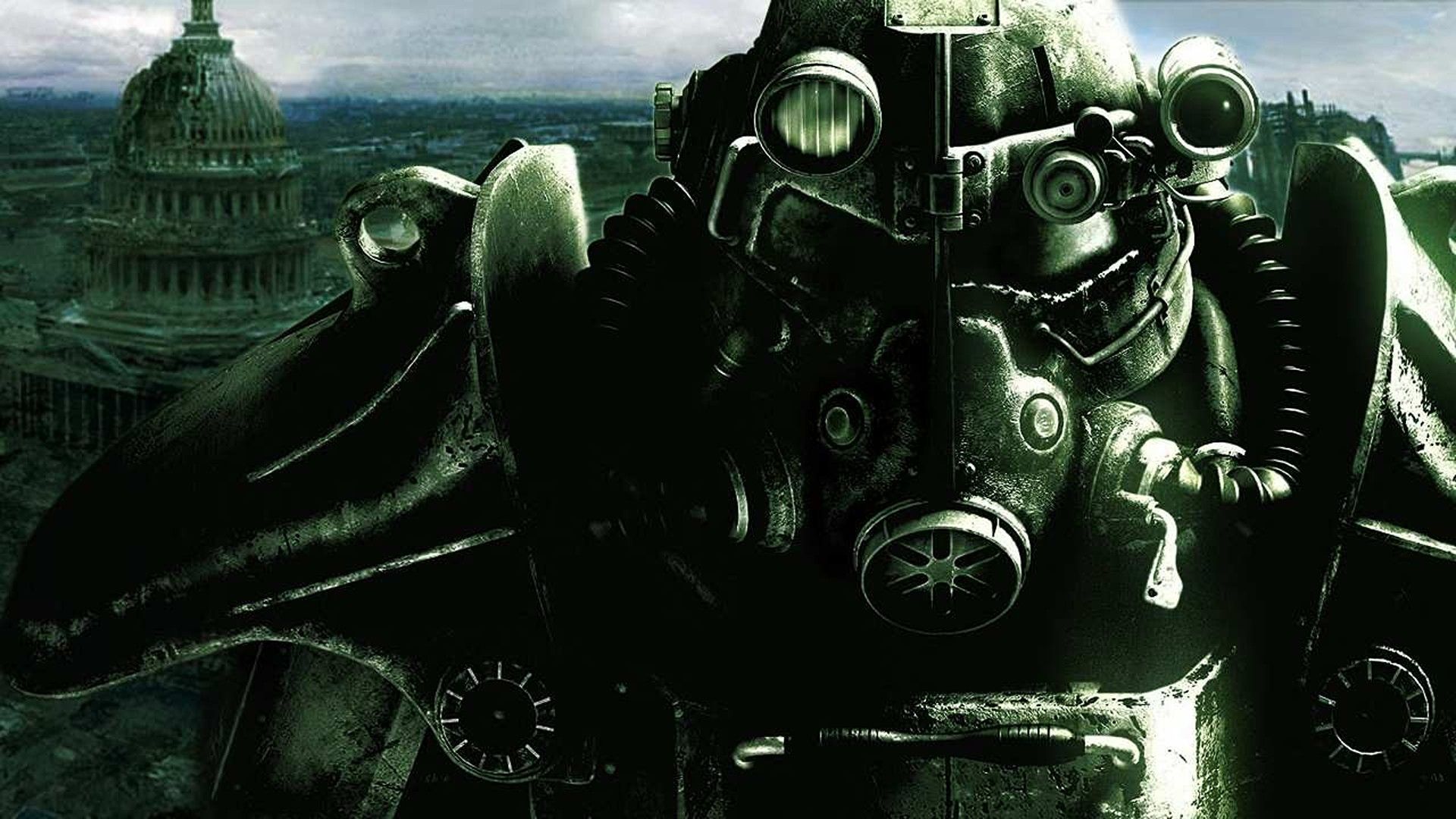
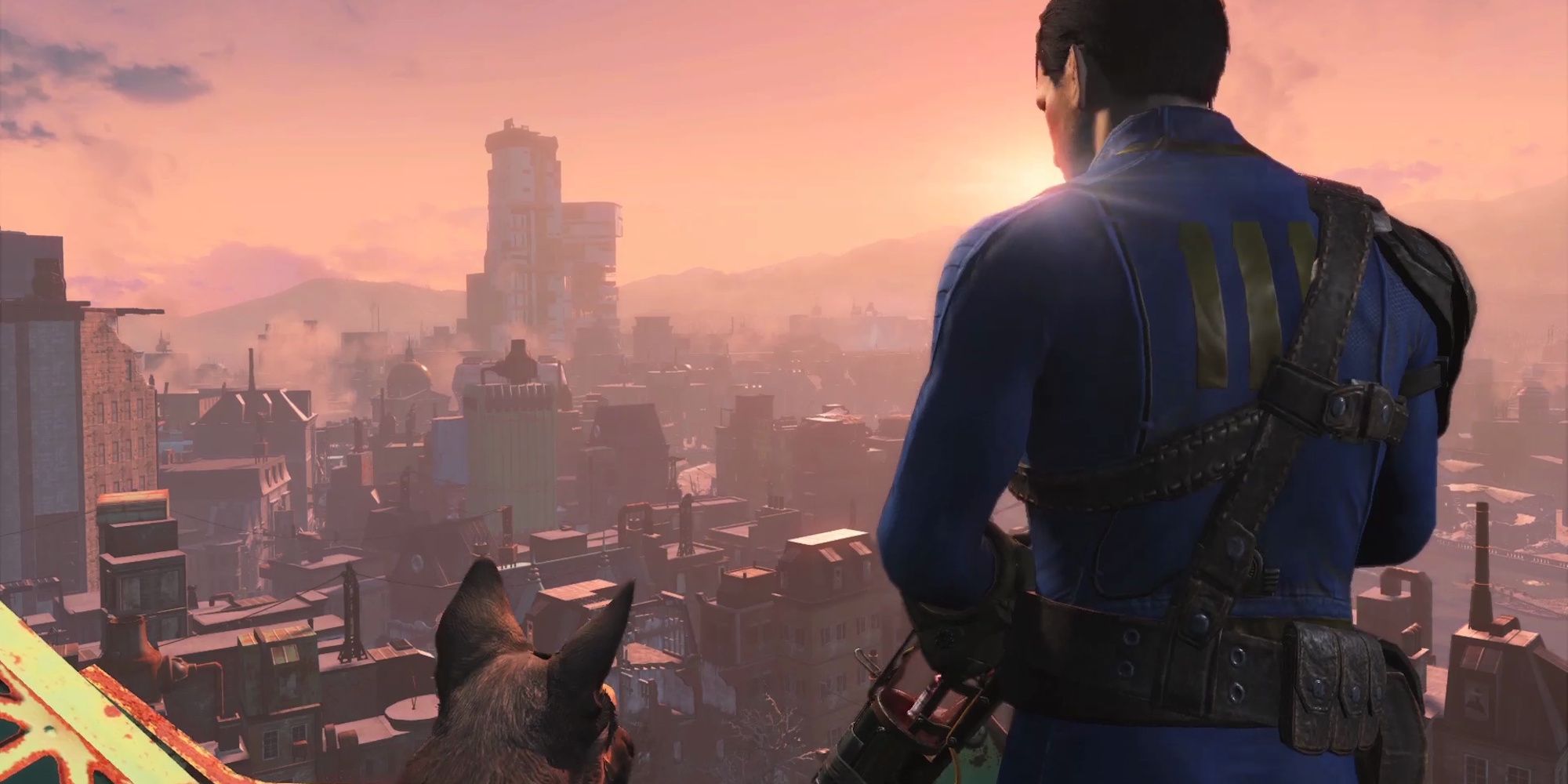
Despite this being a full-fledged role-playing game in a post-apocalyptic world, Fallout 3 wasn’t quite as punishing as Far Cry 2, giving you technically more things to keep track of, but not having those things be quite as stressful. “Relaxing” might not be the perfect word, yet there is a flow and an eventual sense of odd comfort that comes with this game, much as can be said about many of the better titles developed by Bethesda Game Studios.
Fallout 3 emphasized action more than the previous Fallout games, as those weren’t first-person shooters on top of being role-playing games. So, it’s fair to say Fallout 3 modernized and broadened the series, which might not have been the most amazing thing in the world for people who really loved those more old-school Fallout games, but the update that Fallout 3 represented worked for most. The world was great, the gameplay proved addictive, and plenty of side quests – and parts of the main storyline – were morally very interesting, to say the least.
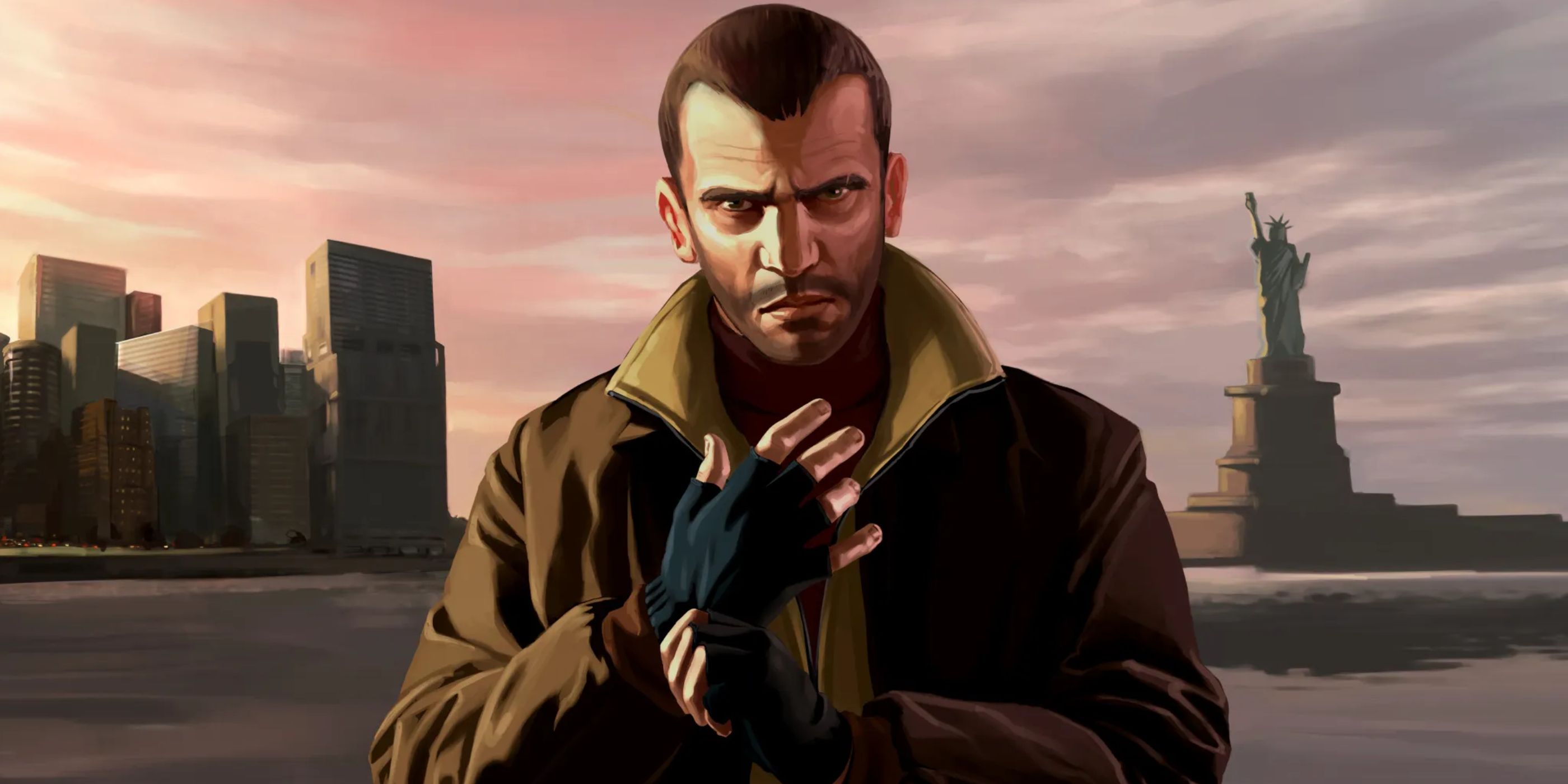
There is still obvious hype for the Grand Theft Auto series, as the long – and sometimes anxious – waiting for Grand Theft Auto VI is showing, at least at the time of writing. Grand Theft Auto V was also massive, in 2013, but wasn’t the first game in the series for the generation, as Grand Theft Auto IV came out in 2008, and was a huge step forward visually and viscerally, for both the series and for gaming as a whole.
The recreation of a city that’s pretty much New York (or an exaggerated/heightened version of it) is incredible here, with the attention to detail honestly being more impressive than some open-world games made in more recent memory. Grand Theft Auto IV gives you a remarkable world to explore, refines – and makes more realistic – the kind of gameplay found in the previous generation’s Grand Theft Auto games, and also contains an amazingly well-written story that rivals some of the best TV dramas of the 2000s (that’s the medium most worth comparing Grand Theft Auto IV’s story to, since it takes so much longer to play through and experience than a movie).