Every decade since 1952, the monthly Sight & Sound magazine, published by the British Film Institute, has conducted a poll to establish the consensus picks of the best movies of all time. In that time, only 4 films have attained the honor of claiming the top spot; this list attempts to rank them.
Every one of these masterpieces — because they truly are masterpieces, all of them — is great in its own way, whether pioneering technical innovations, rejecting storytelling conventions outright, or delving deep into the human condition. They are great representations of the evolving idea of what cinema can be and deserve their placement among cinema's all-time greatest achievements.
"I always do things the same way." Jeanne Dielman, 23 quai du Commerce, 1080 Bruxelles claimed the top spot on the 2022 critics' list. This radical, economical drama follows three days in the life of Jeanne (Delphine Seyrig), a widowed mother living in Brussels, as she performs her daily routine: cooking, cleaning, shopping, and, in the afternoons, engaging in sex work to support herself. The action unfolds mostly in real-time, with the movie forcing the viewer into the character's rhythm, lingering on every interaction.
At first, the repetition feels mundane, yet almost hypnotic in its own way. But gradually, tiny disruptions begin to appear: a missed button, an overcooked meal, a slight hesitation. These small fractures accumulate, creating a growing sense of unease, before breaking loose in a shocking finale. In the process, Jeanne Dielman challenged decades of filmmaking conventions and profoundly influenced generations of directors to follow.
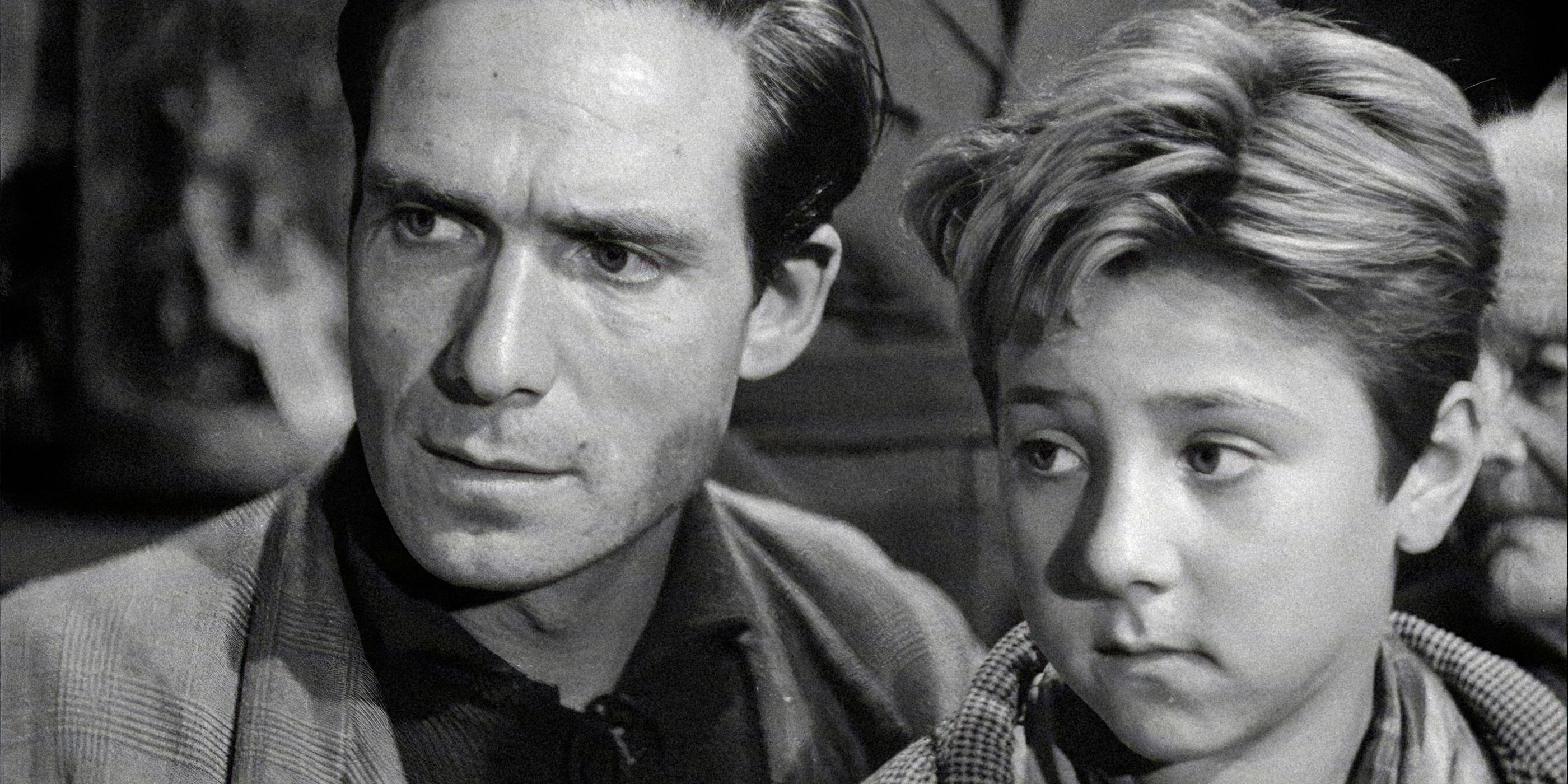
"When you have a job, you have everything." This gem of Italian neorealism was the top pick in 1952, the first year the poll was conducted. It centers on Antonio (Lamberto Maggiorani), a working-class father in post-war Rome who finally secures a job putting up posters, only to have his bicycle, essential for the job, stolen on his first day. Desperate, he and his young son Bruno (Enzo Staiola) spend the day searching the city to recover it.
The plot is simple, almost deceptively so, but its emotional weight is immense. Throughout their search, Bruno witnesses his father's frustration, humiliation, anger, and ultimately his moral collapse. The love between them is evident in every scene, making the film's final moments incredibly poignant. Stylistically, too, Bicycle Thieves was a landmark. Director Vittorio De Sica shot it on real locations and cast largely non-professional actors, giving it an authenticity that still holds up today.
Your answers have pointed to one Oscar Best Picture winner above all others. This is the film that was made for the way your mind works.
You are drawn to films that operate on multiple levels simultaneously — that begin in one genre and quietly, brilliantly migrate into another. Bong Joon-ho's Parasite is a film about class, desire, and the architecture of inequality that manages to be darkly funny, deeply suspenseful, and genuinely shocking across a single extraordinary running time. Your instinct is for cinema that hides its true intentions until the moment it's ready to reveal them. Parasite is exactly that — a film that rewards close attention and punishes assumptions, right up to its devastating final image.
You want it all — and this film gives you all of it. The Daniels' Everything Everywhere All at Once is one of the most maximalist films ever made: action comedy, multiverse sci-fi, family drama, existential crisis, and a genuinely earned emotional core that sneaks up on you amid the chaos. You are someone who responds to ambition, who doesn't want cinema to choose between being entertaining and being meaningful. This film refuses that choice entirely. It is overwhelming by design, and its overwhelming nature is precisely the point — because the feeling of being crushed by infinite possibility is exactly what it's about.
You are drawn to cinema on a grand scale — films that understand history not as a backdrop but as a force, and that place their characters inside that force and watch what happens. Christopher Nolan's Oppenheimer is a film about the terrifying gap between what we can do and what we should do, told with the full weight of one of the most consequential moments in human history behind it. You want your films to feel important without feeling self-important — to earn their ambition through sheer craft and the gravity of their subject. Oppenheimer does exactly that. It is enormous, complicated, and refuses easy comfort.
You are drawn to films that foreground their own construction — that make the how of the filmmaking part of the what it's about. Alejandro González Iñárritu's Birdman, shot to appear as a single continuous take, is cinema examining itself through the cracked mirror of a fading actor's ego. You respond to formal daring, to the feeling that a film is doing something that probably shouldn't be possible. Michael Keaton's performance and Emmanuel Lubezki's restless camera create something genuinely unlike anything else — a film that is simultaneously about creativity, relevance, self-destruction, and the impossibility of ever truly knowing if your work means anything at all.
You are drawn to cinema that trusts silence, that refuses to explain itself, and that treats dread as a form of meaning. The Coen Brothers' No Country for Old Men is a film about the arrival of a new kind of evil — implacable, arbitrary, and utterly indifferent to the moral frameworks we use to make sense of the world. It is one of the most formally controlled films ever made, and its controlled restraint is what makes it so terrifying. You want your films to haunt you, not comfort you. You are not interested in resolution if resolution would be dishonest. No Country for Old Men is honest in a way that most cinema never dares to be.
"I’m afraid of falling." The 2012 list was topped by Vertigo, perhaps Hitchcock's finest study in obsession and illusion. Jimmy Stewart leads the cast as Scottie Ferguson, a retired detective suffering from acrophobia, hired to follow a woman named Madeleine (Kim Novak), whose behavior grows increasingly strange and unsettling. The mystery only grows more disturbing the deeper Scottie digs, and the investigator himself becomes consumed by the idea of recreating Madeleine through another woman.
Hitchcock's direction is immaculate here, deploying innovative camera movements, dreamlike imagery, and powerful use of color to place viewers inside Scottie's fractured mental state. Particularly influential was the famous "dolly zoom," created to visualize Scottie's vertigo. Beneath all the style, Vertigo has insightful things to say about grief, memory, and our occasionally destructive desire to resurrect what has been lost.
"Rosebud." Citizen Kane was, for decades, the undisputed king of the Sight & Sound poll, winning first place five decades in a row from 1962 to 2002. Orson Welles' magnum opus begins with the death of Charles Foster Kane (Welles), a wealthy and powerful newspaper magnate, and the mystery surrounding his final word: "Rosebud." A journalist sets out to uncover its meaning, interviewing those who knew Kane and piecing together fragments of his life.
The structure is non-linear, moving through different perspectives, each offering a partial, often contradictory view of Kane. This fragmentation becomes central to the movie’s main message: that a person cannot be fully understood. Technically, Citizen Kane was revolutionary, too, pioneering several techniques that would become part and parcel of film grammar, like deep focus cinematography, low-angle shots, elaborate tracking shots, and editing choices that were daring for the time.